If you have had a quote for a chemical damp proof course, or you have been looking at DIY kits, you will have come across two options. One is a damp proof injection cream, squeezed into the wall from an applicator gun. The other is an injection fluid, pumped into the wall under pressure. Both do the same job: they put a water-repellent band into the base of a wall so that ground moisture can no longer soak up through it.
This guide explains how the two differ, what the independent certificates actually say about them, and the question that matters more than either: whether your wall needs a chemical DPC at all.
What a chemical DPC actually does
A traditional damp proof course is a physical layer, such as slate, bitumen felt or plastic, built into a wall low down. A chemical DPC works differently. Instead of a sheet, it puts a water-repellent into a line of holes, which lines the pores of the brick and mortar so that moisture can no longer wick upwards. Cream and fluid are simply two ways of getting that water-repellent into the wall.
Damp proof injection cream
DPC creams are thick, concentrated water-repellents. The British Board of Agrément (BBA) certificates describe them as silane or siloxane emulsion creams. They go in like this:
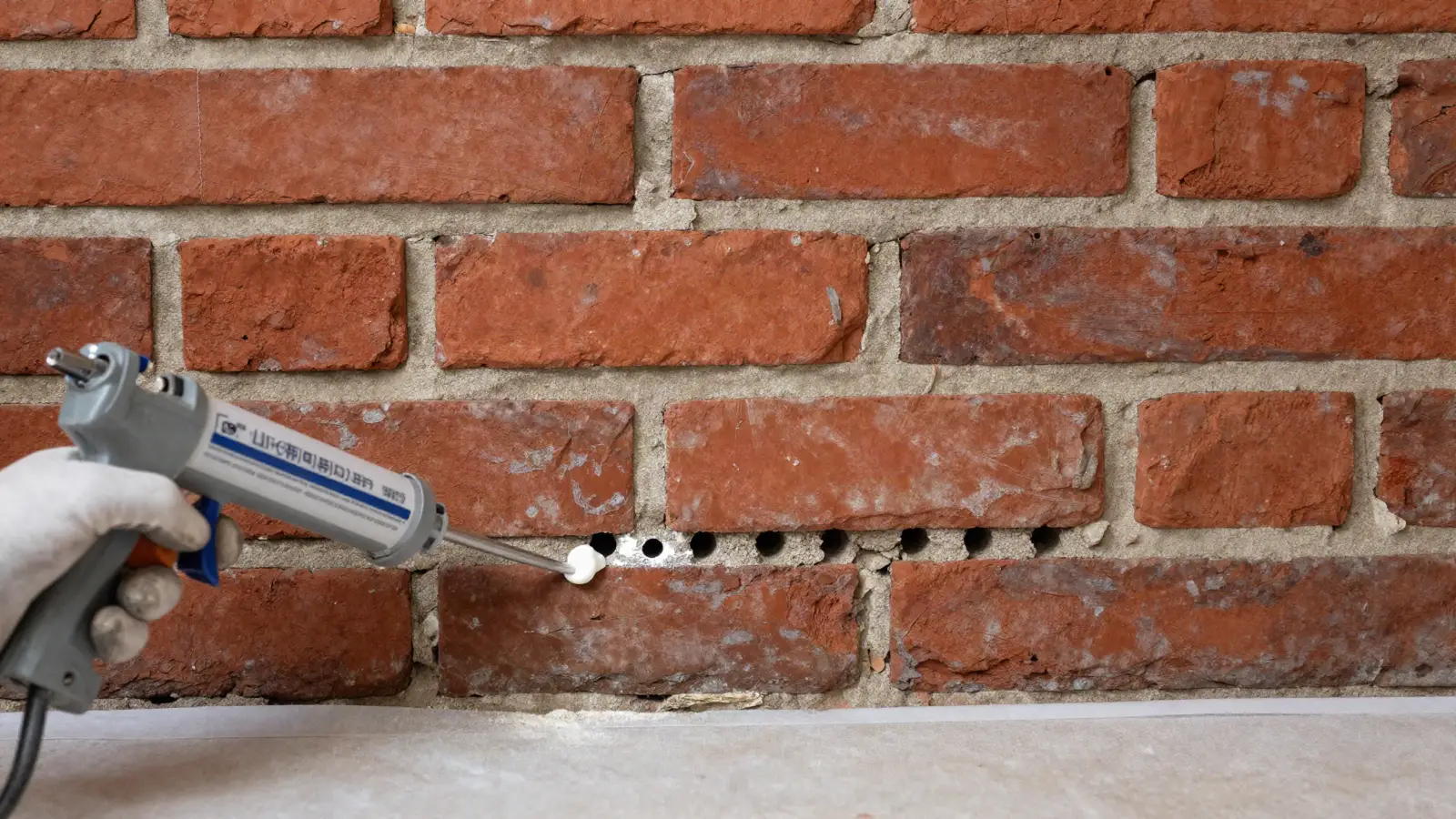
- 12mm holes are drilled into a horizontal mortar course near the base of the wall, no more than 120mm apart.
- The holes go almost through the wall, stopping about 20 to 40mm short of the far face, depending on the product and the wall.
- Each hole is filled with cream from an applicator gun, much like a sealant gun. No pump, no power and no pressure are needed.
- The cream then spreads out into the surrounding masonry and cures into a continuous water-repellent band.
The amount needed is small. The BBA certificate for one leading cream gives 1.9 litres per 10 metres of 230mm (9-inch) wall, so roughly 0.2 litres per metre. In practice a 600ml cartridge treats about 3 metres of a 9-inch solid wall.
Injection fluid
Injection fluids are the older method. They are usually a silicone-based concentrate diluted with water; some products are solvent-based. Here is how a typical certified fluid goes in:
- Holes of 10 to 13mm are drilled about 150 to 170mm apart.
- Nozzles are sealed into the holes and the fluid is pumped in under pressure, 150 to 350 kPa on the certificate we checked, until it shows at the surface of the wall.
- Fluid can be injected into the bricks or stone themselves as well as into the mortar.
- Thick solid walls are often injected from both sides, or drilled and injected in stages.
A 230mm brick wall typically takes about 3 litres of fluid per metre. That is around fifteen times the volume of a cream.
Cream vs fluid at a glance
| Injection cream | Injection fluid | |
|---|---|---|
| How it goes in | Applicator gun, no pump | Pressure pump |
| Where | Mortar course | Mortar course, or into the bricks or stone |
| Typical holes | 12mm, no more than 120mm apart | 10 to 13mm, about 150 to 170mm apart |
| Amount per metre of 9-inch wall | About 0.2 litres | About 3 litres |
| Certified life (BBA) | At least 20 years | At least 20 years |
| Drying time for a 9-inch wall (BBA) | 6 to 12 months | 6 to 12 months |
| Replastering needed afterwards | Yes | Yes |
Figures are taken from BBA certificates for individual products. Each product has its own certificate, so details vary.
Why creams have largely taken over
Pressure-injected fluids are still made and sold, but creams are now the usual choice for hand-applied work. Independent researchers at TU Delft noted in 2018 a clear trend towards cream-type products, and a wider shift from solvent-based to water-based ones.
The practical reasons are easy to see:
- No pump. A cream needs a drill and an applicator gun. There is no pressure equipment to set up or control.
- Less mess. A thick cream is gunned straight into each hole rather than pumped, so there is far less to spill.
- Far less liquid in the wall. About 0.2 litres per metre instead of about 3. When the whole point of the job is to let the wall dry out, putting less water into it is a sensible advantage.
- Drilled into the mortar, not the bricks. That is neater and easier to make good.
Is cream as effective as fluid?
This is where the marketing gets ahead of the evidence. Manufacturers make strong claims for their own creams, but we are not aware of any independent, head-to-head trial in real houses showing that creams as a type work better or worse than fluids.
What we can say is this:
- The certificates treat them the same. The BBA certificates we checked, for creams and for a fluid, give the same assessment: effective against rising damp for at least 20 years, and a 230mm solid brick wall should normally dry out in 6 to 12 months, provided the house is heated normally in winter.
- Not all creams are equal. Active-ingredient content varies a lot from product to product. A cheap, weak cream is not the same as a strong one, so ask which product your installer uses and look at its data sheet.
- Conditions matter as much as product. Research at TU Delft found that many injection products which perform well in the laboratory perform less well in practice, and that the moisture in the wall while the product cures plays a crucial role.
- Check the certificate. Look for a current BBA or equivalent third-party certificate for the specific product. Certificates can be withdrawn, so check on the BBA's own website rather than relying on a logo on a tub.
The bigger question: do you need a chemical DPC at all?
Choosing between cream and fluid only matters if a chemical DPC is the right fix. Very often it is not.
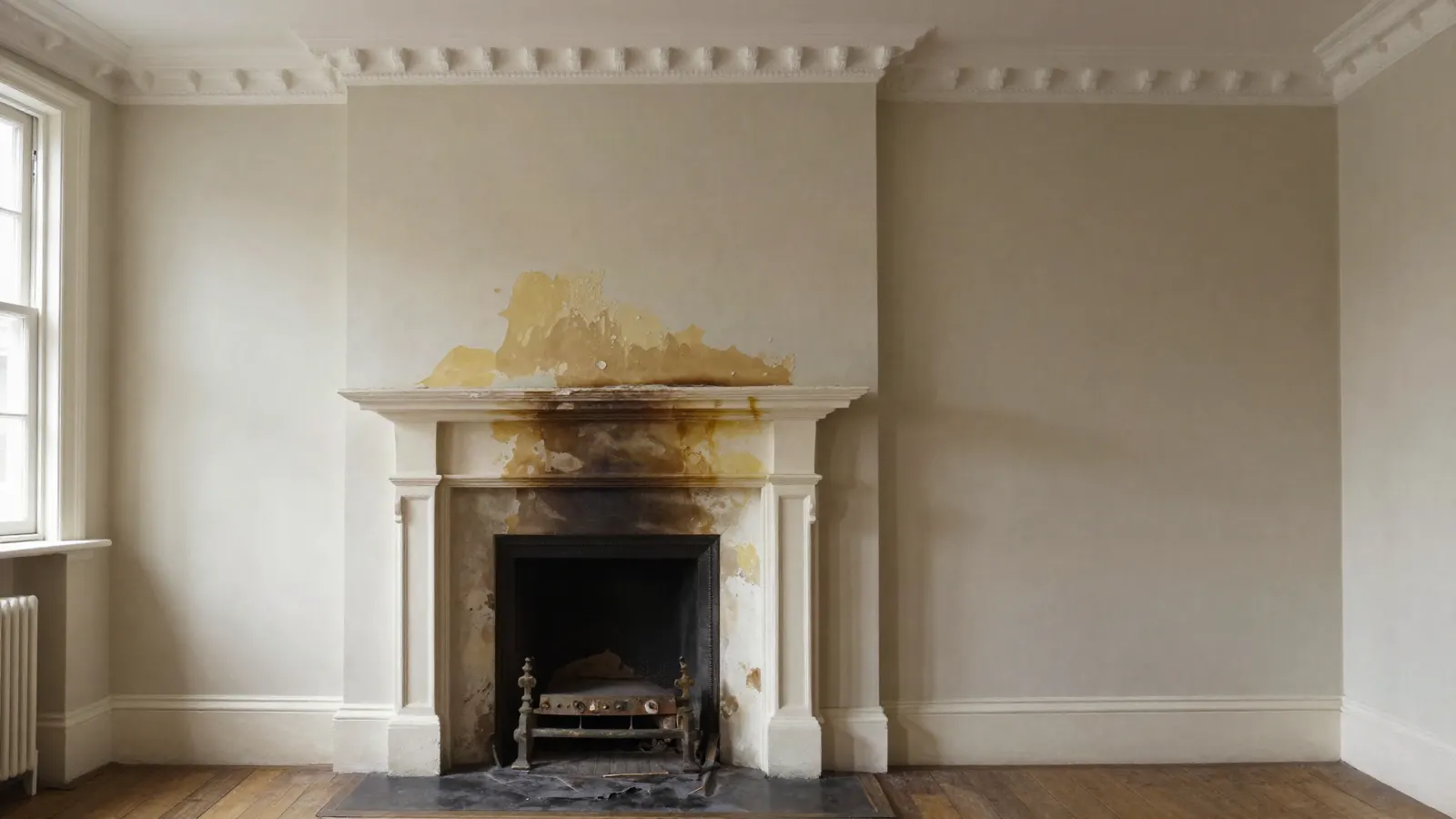
The Royal Institution of Chartered Surveyors (RICS) warns that rising damp is often misdiagnosed, that "rising damp" on its own is not a conclusion, and that failure of an original damp proof course is extremely rare. It also advises being wary of anyone who relies on a damp meter alone. Much of the damp we see low down on Brighton walls turns out to be something else:
- Rain splashing back off a path or patio, or outside ground levels built up above the DPC
- A DPC bridged by render, a raised flowerbed or rubble in the cavity
- Leaking pipes, gutters or downpipes
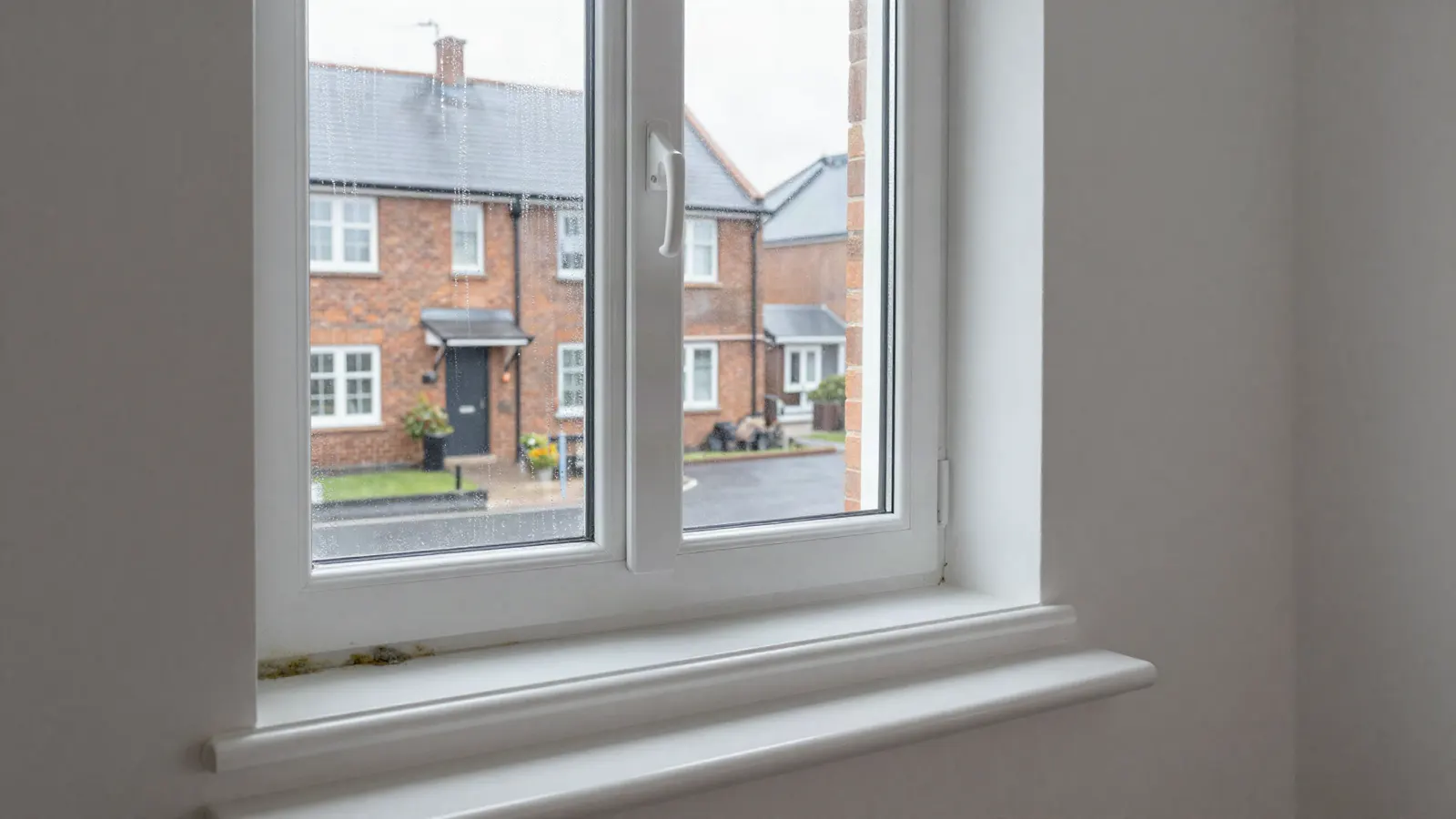
- Condensation, especially behind furniture on cold external walls
None of these is fixed by injecting anything. We cover how to tell the difference in how to tell if you have rising damp and was my damp proof course installed correctly?.
Old, flint and listed buildings
The Society for the Protection of Ancient Buildings (SPAB) advises a strong presumption against inserting retrofit DPCs into buildings from before about 1919. It says treatment is difficult in flint and rubble-cored walls, and that DPCs should be avoided altogether in earth buildings. That is very relevant in Sussex, where flint cottages are common in places like Rottingdean, Ovingdean and Falmer. An independent building pathologist writing in the Building Conservation Directory makes a similar point: in stone and rubble walls, injected material tends to take the path of least resistance, so treatment is least reliable there.
Where a DPC genuinely is justified on an old building and a physical one cannot be inserted, SPAB notes that chemical injection is the only method that currently holds third-party certification. On these buildings the diagnosis, and the breathable lime plaster afterwards, matter far more than the choice of cream or fluid. See our guide to damp proofing listed buildings.
What about other DPC types?
- Physical DPC. A new membrane is sawn into a mortar joint. The building pathologist mentioned above calls a physical barrier the most reliable method. It is also disruptive, and it is not suitable for flint, rubble-filled or very thick walls.
- Electro-osmotic DPC. These systems run a small current through the wall. They have no British third-party certification, and independent research on them is mixed.
- Ceramic or porous "breathing" tubes. These are based on the idea that damp air sinks out of the wall. Historic England's Robyn Pender has pointed out that humid air actually rises, so the principle does not hold.
The part that decides whether it works: replastering
Whichever product goes in, the BBA certificates are clear that the job is not finished at the injection:
- The old plaster has to come off. The certificates we checked require removal to at least 300mm above the highest sign of damp, and several set a 1 metre minimum. Old plaster is full of salts that keep pulling moisture from the air.
- Leave it before replastering. The certificates allow for at least 14 days of initial drying before the wall is replastered.
- Replaster properly. Replastering is needed to hold the remaining salts in the wall and protect the new decoration.
- Then be patient. A 9-inch wall takes 6 to 12 months to dry out fully, and longer if it is thicker.
Skip the replastering and the damp patches usually come back, whichever product was used. We explain why in why we strip walls back to brick and how long damp proofing takes.
Can you DIY a cream DPC?
DPC cream kits are sold in DIY stores, and one manufacturer's own 310ml kit, rated for about 6 metres of 9-inch wall, costs around £100 (November 2026). The drilling and gunning are not difficult. But bear in mind:
- The BBA certificates assess these products as installed by experienced contractors, not as DIY products.
- The most common DIY mistake is not the injection itself. It is treating damp that was never rising damp, or leaving the salty old plaster in place.
- A DIY job carries no installer's guarantee, which can matter when you come to sell.
For professional prices, our damp proofing cost guide covers cost per metre and what is usually included. MyJobQuote's 2026 cost guide notes that the different types of chemical DPC are installed in similar ways and cost similar amounts, so the choice of product should not change the price much.
What we use, and why the survey comes first
On most walls that genuinely need a chemical DPC, we use a BBA-certified silicone-based injection cream drilled into the mortar course. Then we strip and replaster to the manufacturer's specification. But on many visits the honest answer is that no DPC is needed at all: what is needed is lower ground levels, a fixed gutter or better ventilation.
That is why every job starts with a proper damp survey. If it does turn out to be rising damp, see our rising damp treatment page for how we tackle it.
Rising damp in Brighton, Hove or Sussex?
We will tell you honestly whether you need a chemical DPC, and we will not sell you one you do not need. Surveys start from £95 plus VAT, credited against any works. As a Biokil-approved contractor, our qualifying damp proofing work carries a 30-year guarantee. Call 01273 536 985 or get in touch.