If you have looked into rising damp, you will have come across the term DPC, or damp proof course. It is one of the most important — and least understood — parts of any house. This guide explains what a damp proof course actually is, why so many Brighton and Sussex properties no longer have a working one, and how a modern chemical DPC is installed.
What a damp proof course does
A damp proof course is a continuous, water-resistant barrier built into a wall, usually about 150mm (two brick courses) above outside ground level. Its job is simple but vital: to stop moisture in the ground being drawn up through the porous masonry by capillary action, the same effect that draws water up a paper towel. With a functioning DPC, ground moisture is blocked before it can climb into the living space. Without one, you get rising damp — the classic tide mark, salt staining and crumbling plaster at the base of a wall.
Why older properties lack a working DPC
Brighton and Sussex are full of period housing, and the older the property, the more likely it is to have a damp-proof problem:
- Georgian and early Victorian homes, and traditional flint and bungaroosh cottages, were often built with no DPC at all — the concept was not yet standard.
- Later Victorian and Edwardian terraces typically have an original slate or bitumen DPC, but after a century or more these have frequently cracked, broken down, or been bridged by raised paths, patios or internal floor levels.
Once a DPC is missing, failed or bridged, moisture climbs freely — and because the rising water carries hygroscopic ground salts into the plaster, the problem keeps getting worse until it is properly addressed.
A DPC does not wear out gracefully. It either works or it does not — and a bridged or broken one lets damp climb just as readily as having none at all.
How a modern chemical DPC injection works
Replacing a physical DPC by cutting one into an existing wall is hugely disruptive, so the modern standard is a chemical damp proof course. The process is methodical:
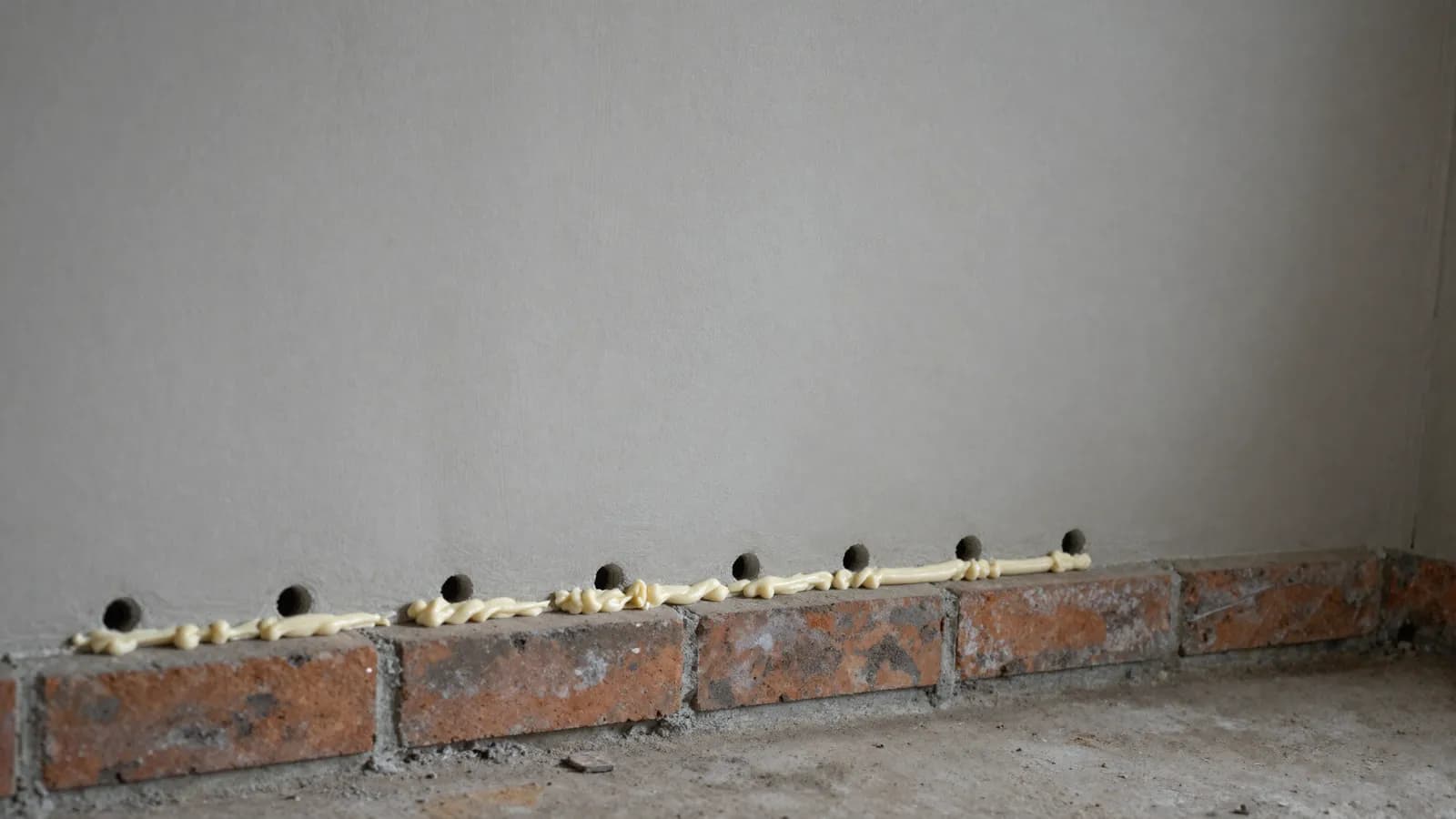
- A line of holes is drilled at regular intervals along the base of the affected wall, at mortar-joint level.
- A silicone-based water-repellent cream is injected into each hole.
- The cream diffuses through the masonry and cures to form a continuous, water-repellent barrier — effectively a new DPC.
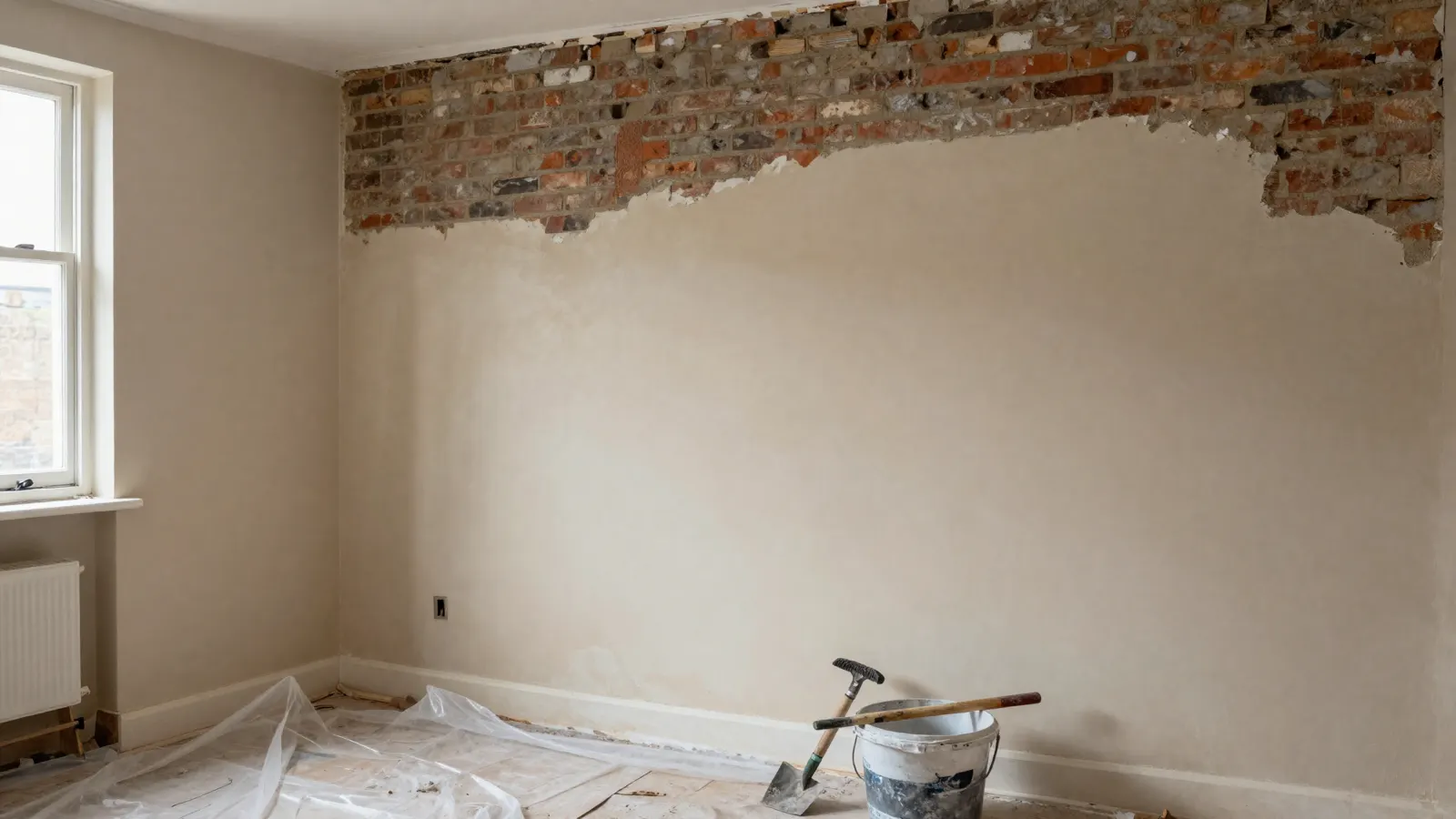
- The holes are made good, and the contaminated plaster is removed and replaced.
We use BBA-certified products and follow industry best practice for hole spacing, depth and injection. It is a clean, proven, minimally disruptive way to stop rising damp at source.
Why replastering is part of the job
This is the step homeowners most often underestimate. Injecting a new DPC stops fresh moisture rising — but the old plaster is already loaded with hygroscopic salts that will keep drawing moisture out of the air for years. That is why a proper DPC installation always includes hacking off the contaminated plaster and replacing it with a salt-resistant render system. A DPC injection without the replastering is only half a job. We explain where the money actually goes in our Brighton damp proofing cost guide.
Do you actually need one?
Crucially — not every damp wall needs a new DPC. Rising damp is frequently misdiagnosed; condensation, penetrating damp and bridged ground levels all mimic its symptoms, and injecting a DPC into a wall that is really suffering from one of those will not fix anything. That is why we never recommend a chemical DPC without first confirming genuine rising damp through a proper survey with calibrated instruments and salt analysis.
Find out what your walls actually need
If you have damp at the base of a wall and want to know whether a new damp proof course is the answer, the sensible first step is a diagnosis, not a sales pitch. We carry out damp surveys across Brighton, Hove and Sussex from £95 plus VAT, credited against any works, and as a Biokil-approved contractor our DPC work carries a 30-year guarantee. Call 01273 536 985 or get in touch.