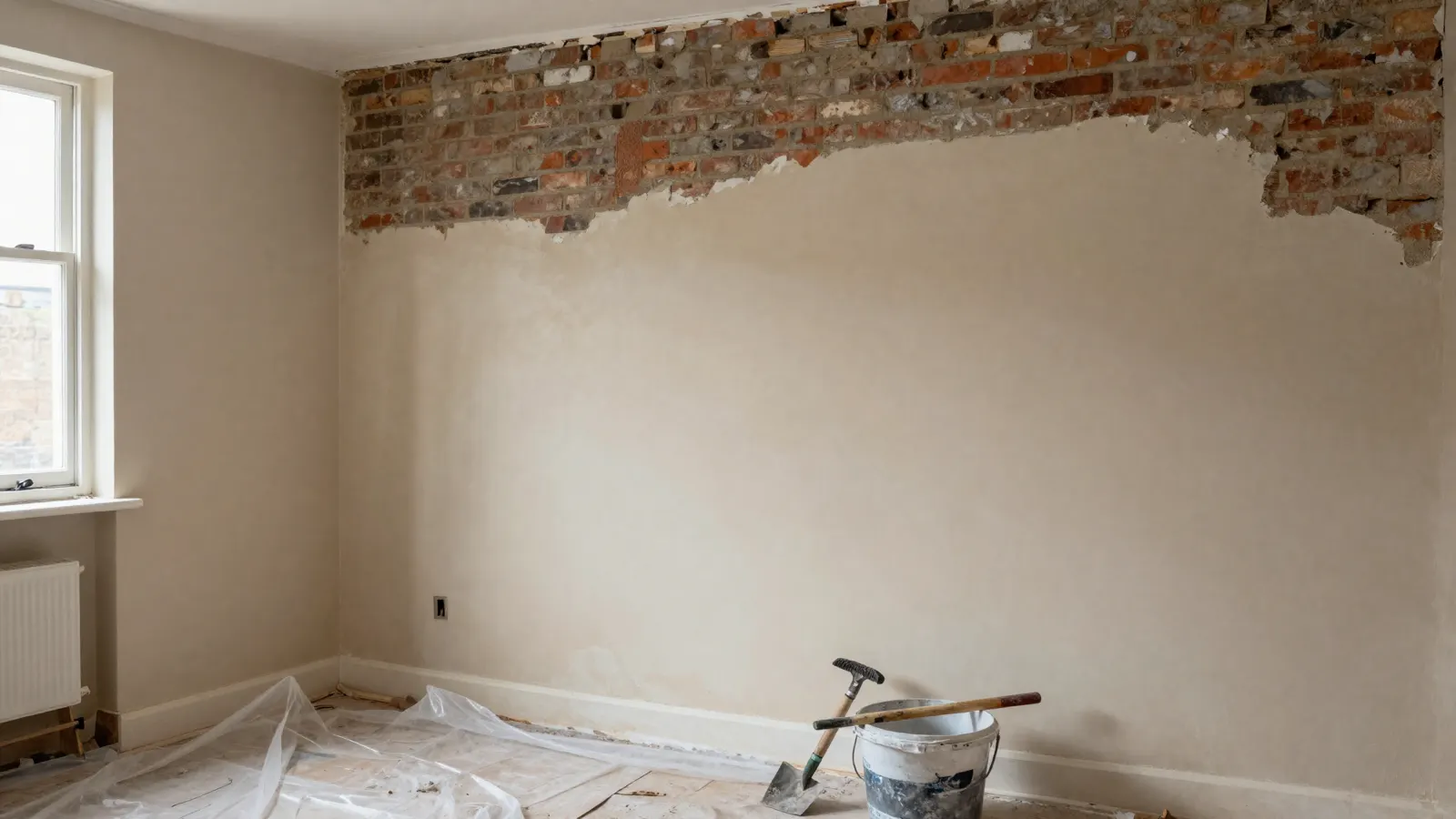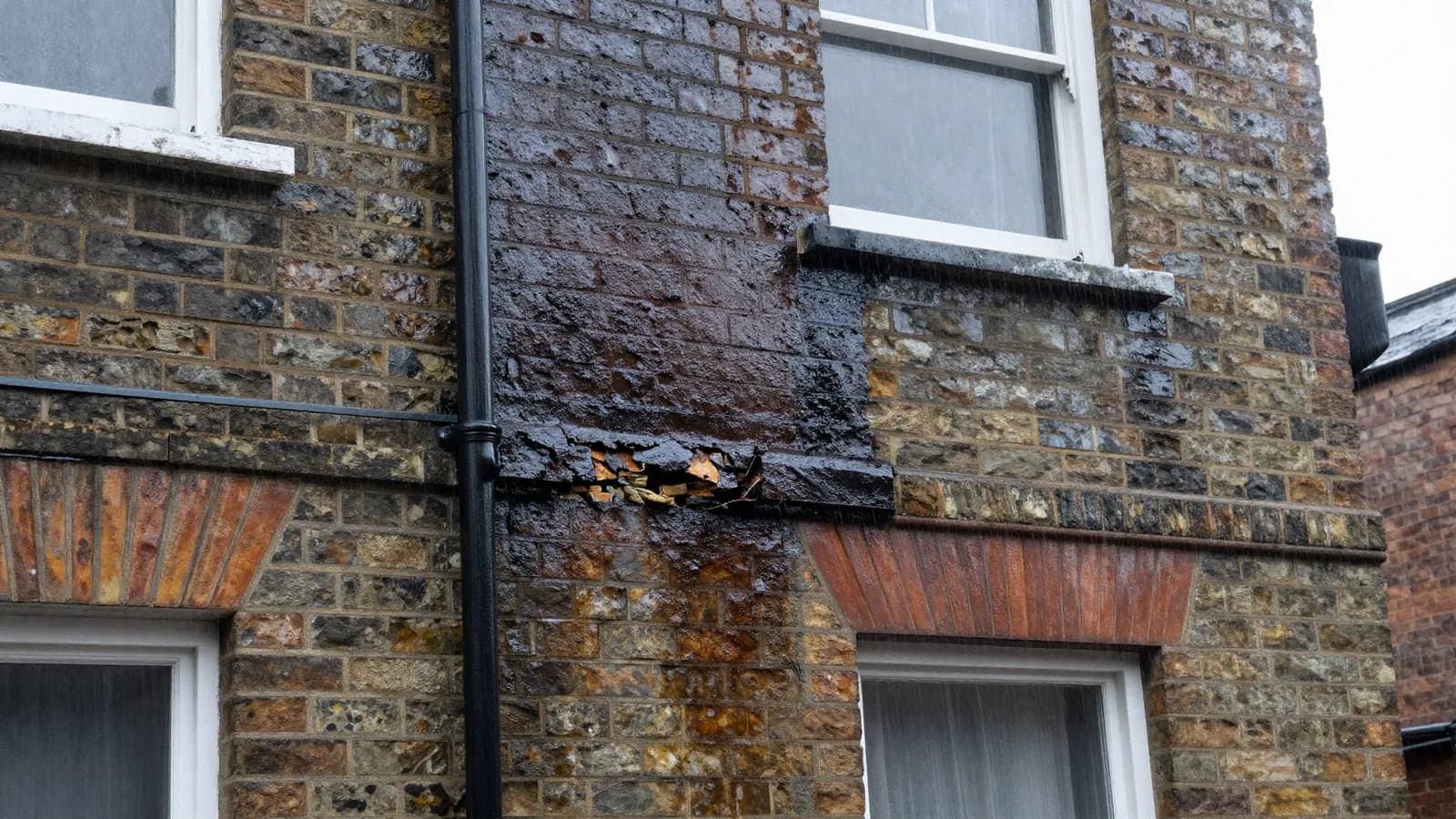
Unlike rising damp, which climbs upward from the ground, penetrating damp moves sideways — water finds its way through the outer fabric of a building and into the rooms behind. On the exposed, weather-beaten properties of Brighton, Hove and the wider Sussex coast, it is one of the single most common damp problems we are called out to, and one of the most frequently misdiagnosed.
What penetrating damp is
Penetrating damp (sometimes called lateral damp) occurs when rainwater or groundwater passes through the external walls, roof or openings of a building rather than evaporating or draining away. Solid-wall Victorian and Edwardian houses — of which Brighton has thousands — are especially vulnerable, because they have no cavity to act as a break between the wet outer face and the dry inner face. Once the masonry becomes saturated, moisture tracks straight through to the internal plaster.
The signs of penetrating damp
The hallmark of penetrating damp is that it is localised and weather-driven — it appears in a specific patch and gets noticeably worse during and after heavy rain. Watch for:
- Damp patches on walls or ceilings that darken when it rains and dry out in spells of good weather
- Patches that can appear at any height — not just at the base of the wall like rising damp
- Blistering plaster, peeling paint or wallpaper in the affected area
- Water staining or tide marks around a specific feature — a window reveal, chimney breast, or where an extension meets the main wall
- Visible damp or moss on the corresponding external wall
Penetrating damp has a tell: it tracks the weather. If a patch darkens after every downpour and fades in a dry spell, you are almost certainly looking at water coming in from outside.
What causes penetrating damp
Penetrating damp is almost always a symptom of a defect in the building's external envelope. The usual culprits are:
| Source | What goes wrong |
|---|---|
| Guttering and downpipes | Blocked, cracked or leaking, so water sheets down the wall |
| Pointing and mortar | Eroded joints let water soak into the masonry |
| Render | Cracked or blown render traps water against the wall |
| Roof | Slipped tiles, failed flashing around chimneys and valleys |
| Windows and doors | Perished sealant and rotten frames let water past |
| Cavity walls | Corroded wall ties or debris bridging the cavity (in later properties) |
Because the fix depends entirely on finding the right cause, diagnosis is everything — treating the symptom without fixing the source is wasted money.
Penetrating damp vs rising damp
The two are routinely confused, but they behave very differently and need completely different remedies. If you are not sure which you are dealing with, our guide to rising damp vs penetrating damp breaks down the differences side by side. In short: rising damp is a consistent band low down on the wall, present year-round; penetrating damp is a localised patch that flares up with the weather and can appear at any height.
How penetrating damp is fixed
Effective treatment always follows the same logic: find the defect, fix the defect, then make good inside. Depending on what the survey reveals, that might mean clearing and repairing guttering, repointing or re-rendering the affected elevation, replacing failed flashing, or renewing window seals. Only once the water is locked out do we replaster internally, using a salt-resistant specification where the masonry has been contaminated. On exposed coastal walls we sometimes also apply a breathable masonry water-repellent to shed driving rain while still letting the wall dry.
For a sense of what remedial work costs, our Brighton damp proofing cost guide sets out realistic 2026 figures — penetrating damp repairs vary widely because they depend on access and the scale of the external defect.
Why coastal Sussex is so prone to it
Brighton and the Sussex coast take the full force of driving rain from the south-west, salt-laden air, and decades of weathering on solid-wall and rendered properties. Exposed seafront and hilltop elevations in Kemptown, Hove and Saltdean get soaked far harder than sheltered inland walls, and once render or pointing starts to fail, the wet ingress accelerates. It is no coincidence that penetrating damp is one of our most-requested services across the city.
Get the source diagnosed
If you have a damp patch that worsens with the weather, the worst thing you can do is paint over it — that traps the moisture and hides the real defect. The right first step is a proper damp survey to locate exactly where the water is getting in. We diagnose and treat penetrating damp across Brighton, Hove and Sussex, our surveys start from £95 plus VAT and are credited against any works, and as a Biokil-approved contractor our remedial work carries a 30-year guarantee. Call 01273 536 985 or get in touch.