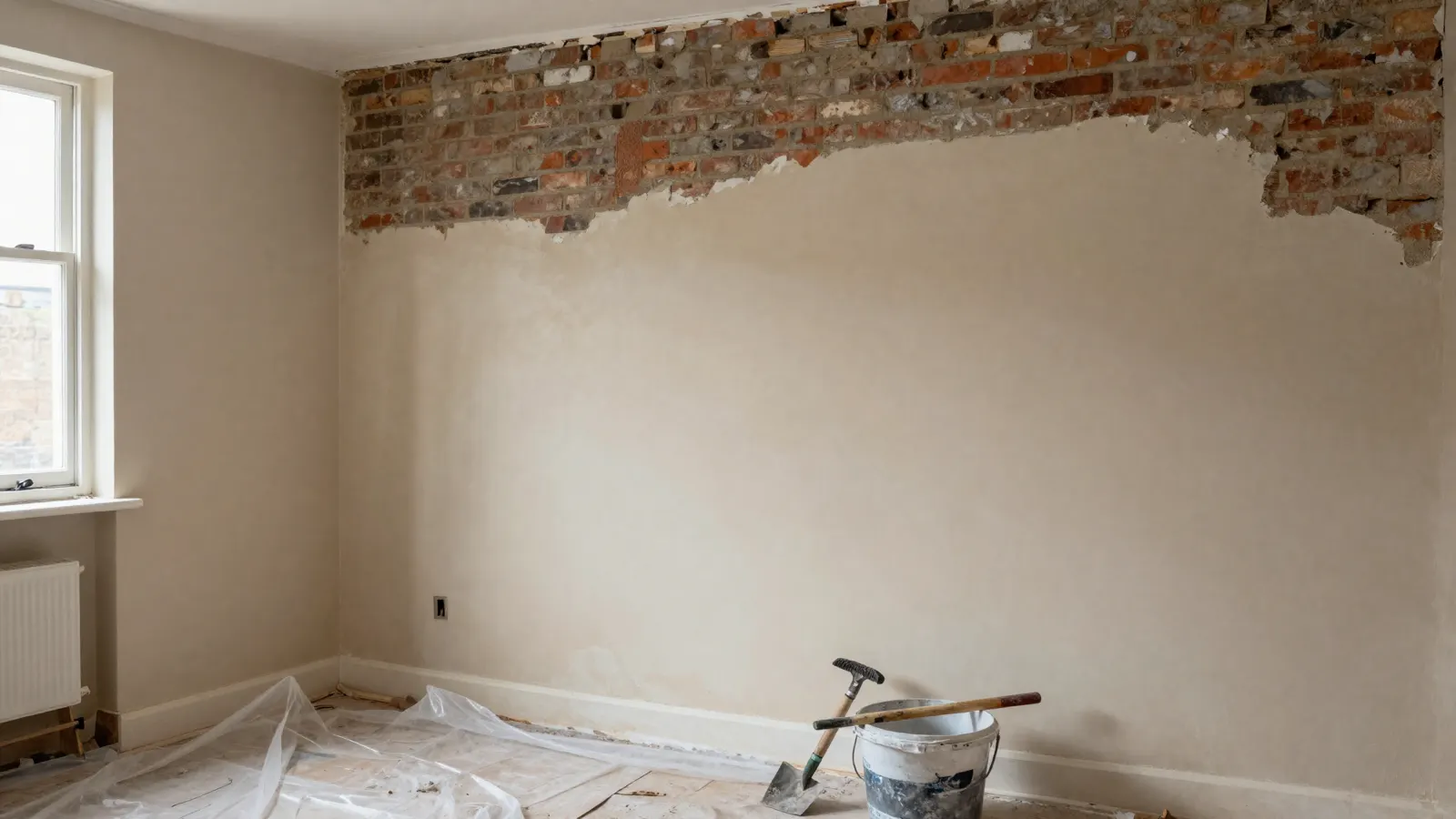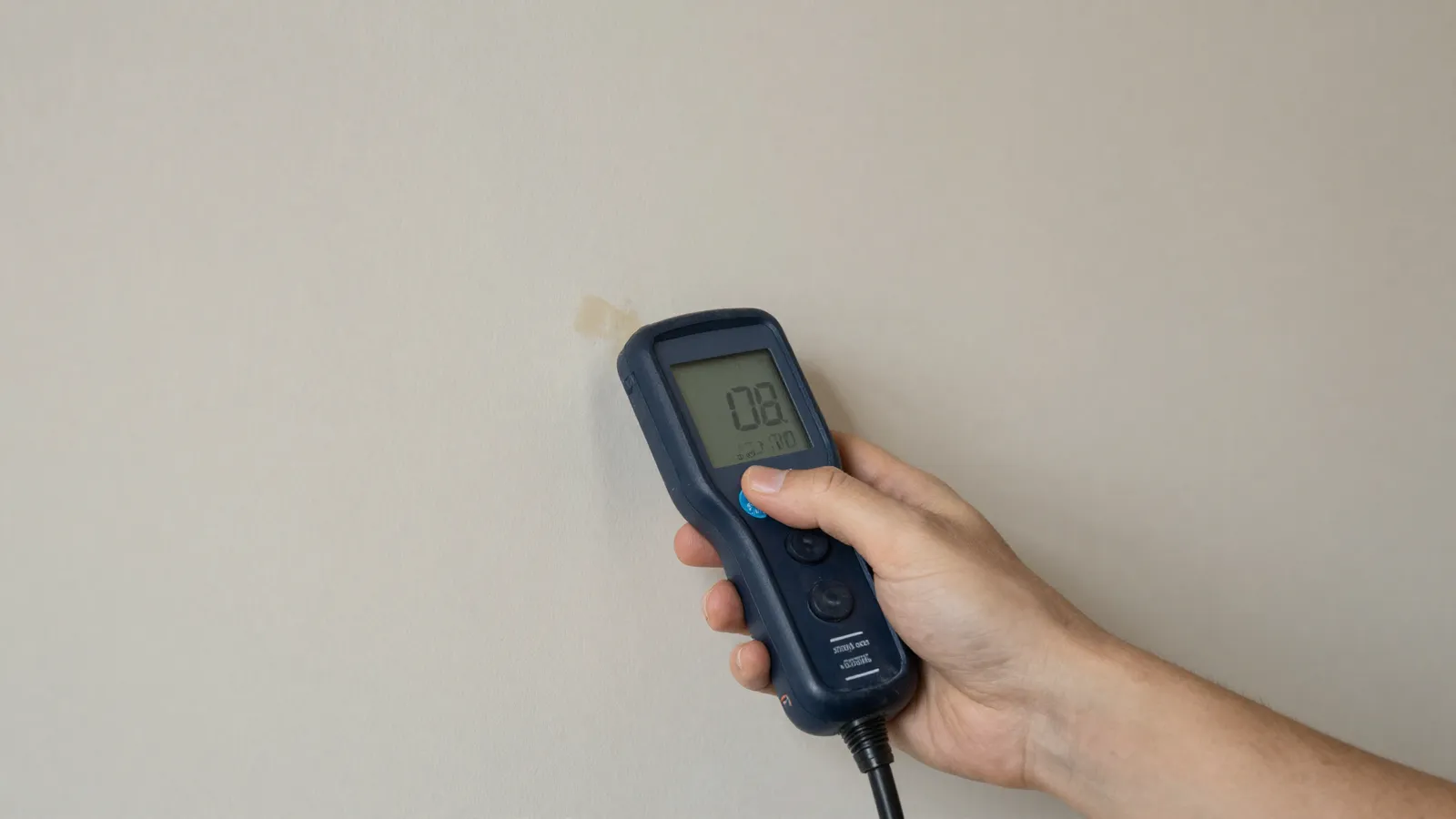
Two walls can show damp staining that looks almost identical, yet need entirely different repairs. Rising damp and penetrating damp are the two most commonly confused moisture problems we see across Brighton and Sussex — and getting the diagnosis wrong is the single most expensive mistake a homeowner can make, because the treatment for one does nothing for the other. Here is how to tell them apart.
Rising damp, in brief
Rising damp is groundwater climbing upward through the wall by capillary action, because the damp proof course is missing, failed or bridged. It produces a consistent, year-round band of moisture low on the wall. Our guide on how to tell if you have rising damp covers its signs in full.
Penetrating damp, in brief
Penetrating damp is rainwater coming inward through a defect in the building — a leaking gutter, cracked render, eroded pointing or slipped roof tile. It produces a localised patch that flares up with the weather. Our penetrating damp guide explains it in detail.
The key differences at a glance
| Rising damp | Penetrating damp | |
|---|---|---|
| Direction | Climbs up from the ground | Comes in from outside |
| Position | A band, usually up to ~1m above floor | Anywhere — often mid-wall or by a feature |
| Pattern | Consistent horizontal tide mark | Localised patch, irregular shape |
| Timing | Present all year round | Worse after rain, fades in dry spells |
| Salts | Hygroscopic salts in a band | Salts only if long-standing |
| Root cause | Failed or absent DPC | External defect (gutter, render, roof) |
| The fix | New chemical DPC + replaster | Repair the external defect + make good |
How to tell which one you have
Run through these three questions:
- Where is it? Low down in a consistent band points to rising damp. Higher up, or around a window, chimney or extension junction, points to penetrating damp.
- Does it change with the weather? If the patch darkens after rain and dries out in good weather, it is penetrating. If it stays the same regardless, it is more likely rising.
- Is the outside wall defective? Check the corresponding external wall for blocked gutters, cracked render or eroded pointing. A clear external fault strongly suggests penetrating damp.
The quickest home test: does it track the weather? Rising damp ignores the forecast; penetrating damp follows it.
Do not forget condensation
There is a third possibility that is actually the most common of all: condensation. It typically appears as black mould in corners, on cold external walls and around windows, and is worse in winter. If your problem looks more like surface mould than a wet wall, read condensation vs damp before assuming you have either rising or penetrating damp.
Why the right diagnosis matters
Injecting a chemical DPC into a wall that actually has penetrating damp will not work — and repointing an elevation when the real issue is a failed DPC is equally pointless. Worse, the wrong treatment can trap moisture and accelerate the damage. This is exactly why a proper damp survey with calibrated moisture meters and salt analysis pays for itself: it tells you which problem you actually have before you spend a penny on the cure.
We diagnose and treat all three across Brighton, Hove and Sussex. Surveys start from £95 plus VAT, credited against any works, and as a Biokil-approved contractor our work carries a 30-year guarantee. Call 01273 536 985 or get in touch.