Most damp proofing tries to stop water getting in. Cavity drain membrane does the opposite — it lets water reach the wall, then quietly takes it away before it ever reaches your room. It sounds counter-intuitive, but for basement waterproofing and badly contaminated walls it is the most dependable system there is, which is why it underpins so many of the jobs we carry out across Brighton, Hove and Sussex.
If you are weighing it against cementitious tanking, our guide to tanking vs cavity drain membrane compares the two head to head. This article is about how the cavity system actually works, and what installing one really looks like.
What a cavity drain membrane actually is
The membrane itself is a tough sheet of high-density polyethylene, moulded with a grid of raised studs or "dimples". When it is fixed to a wall, those dimples hold the flat face of the membrane a few millimetres clear of the masonry, creating a continuous, deliberate air gap behind it. That gap is the whole point: it gives any moisture in the wall somewhere harmless to go.
The same product is made in heavier grades for floors, and in mesh-faced versions designed to be plastered or dry-lined straight over. Whatever the finish, the principle never changes — a drained void between the damp structure and the dry room.
Manage the water, do not fight it
Cementitious tanking forms a barrier and relies on out-muscling the water pressure pushing against it. If that pressure ever wins — and after heavy rain the water table under parts of Brighton rises sharply — a tanked wall can blister and fail all at once.
A cavity drain system removes that battle entirely. Any water that works through the masonry simply runs down the back of the membrane, into a drainage channel at the base of the wall, along to a collection point called a sump, and is then pumped out to a drain or soakaway. Nothing is being held back under pressure, so there is nothing to fail catastrophically. This is the Type C approach defined by the British Standard for below-ground waterproofing, BS 8102, and it is widely considered the safest option for turning a cellar into a habitable room.
What the installation looks like
A proper cavity drain installation is methodical, and the order matters:
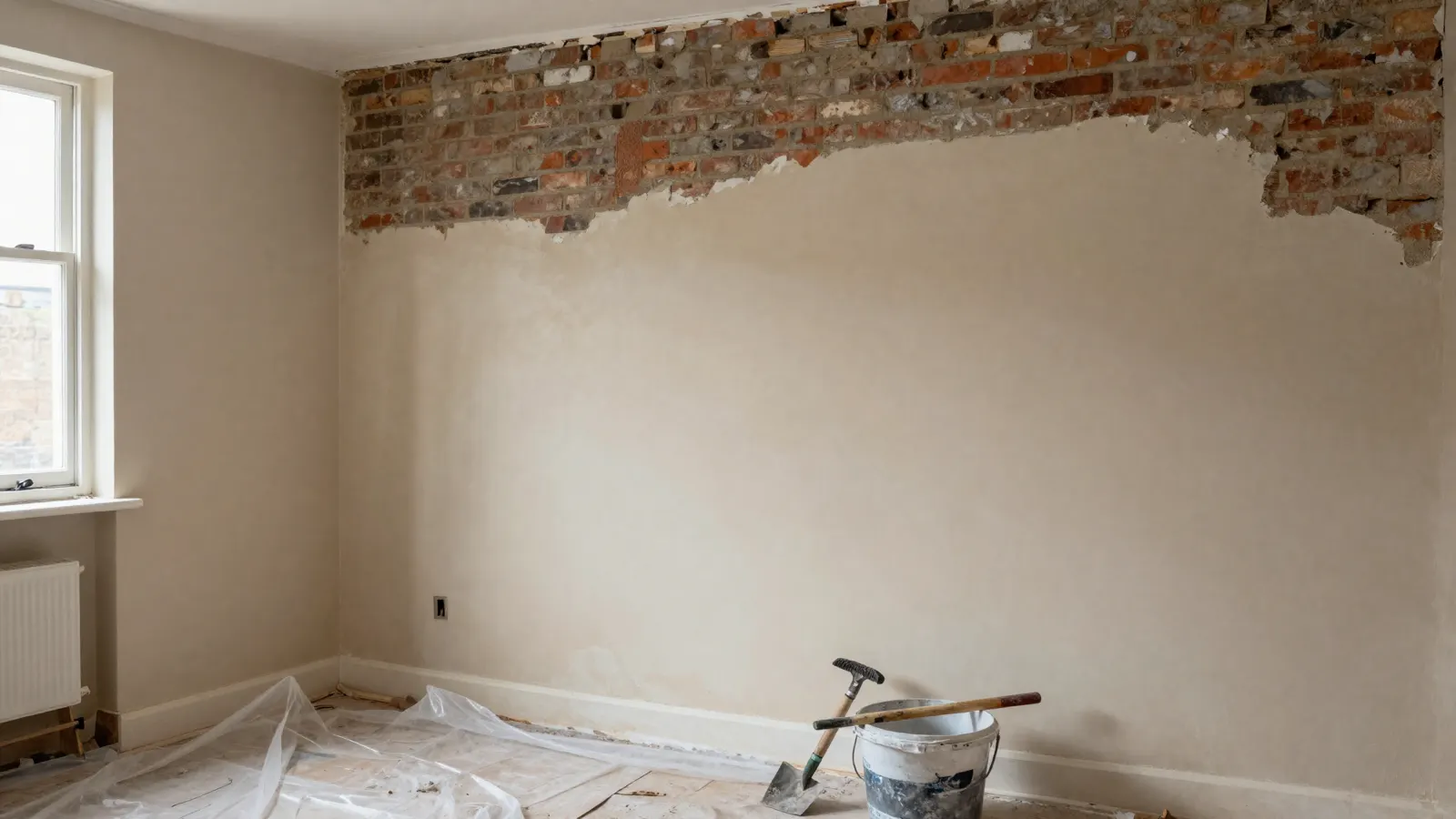
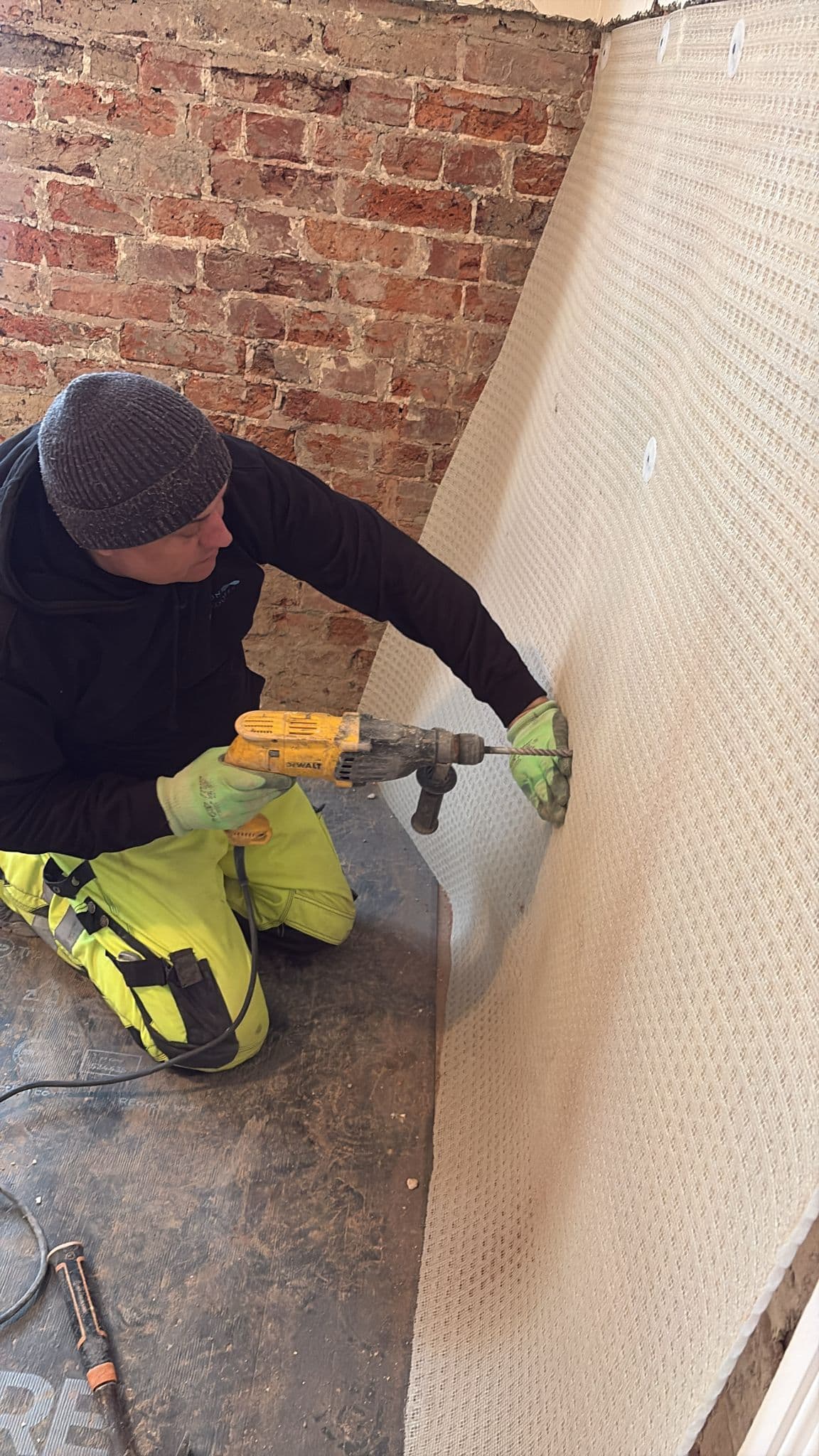
- Strip back and prepare. We remove old, salt-laden plaster and any loose material so the membrane fixes to sound masonry. Walls like the bare Victorian brickwork shown here are exactly what we want to start from.
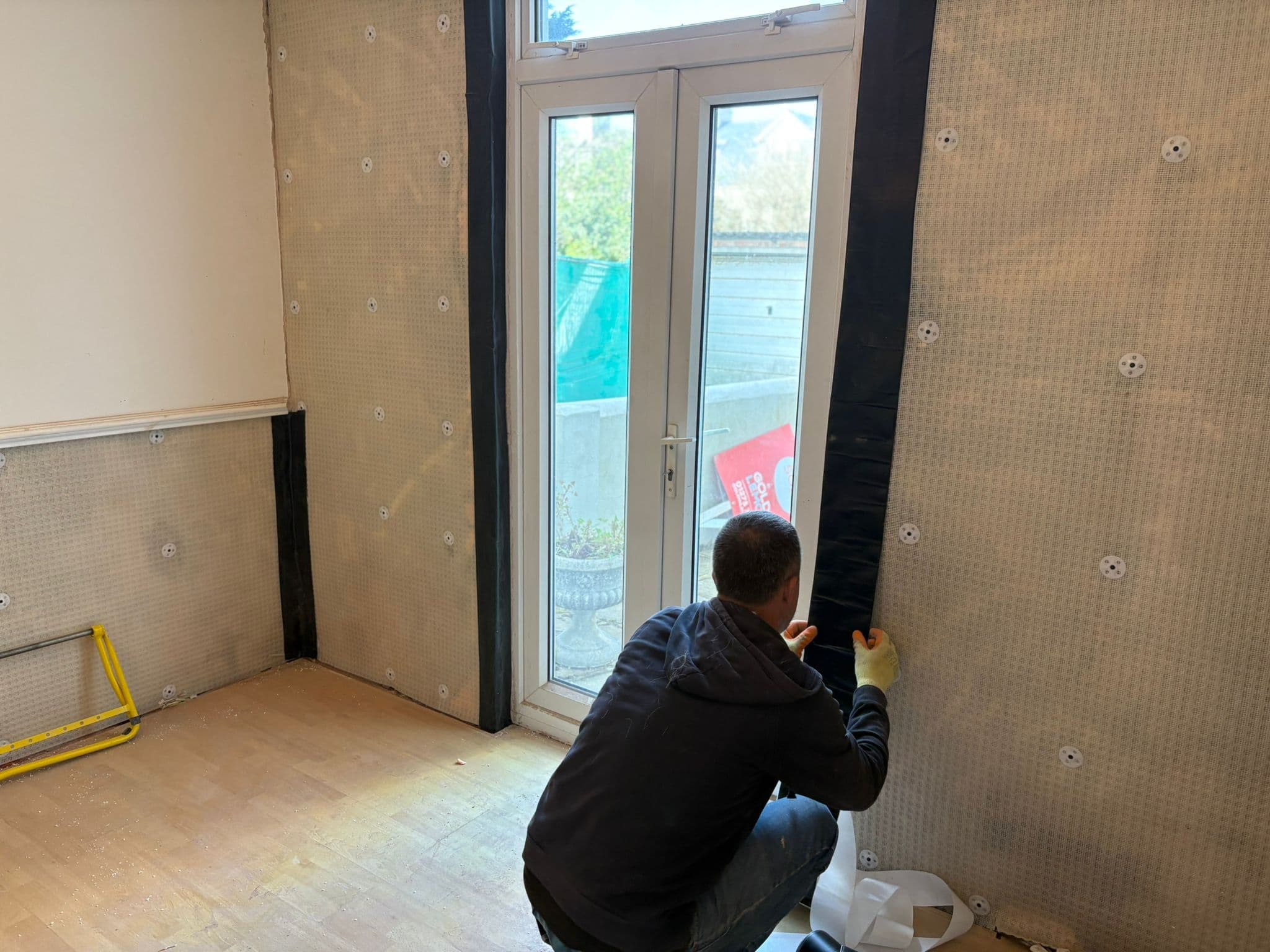
- Fix the membrane. Sheets are mechanically fixed with special sealed plugs that grip the wall without breaking the waterproof plane, and overlaps are bonded so the whole wall becomes one continuous drained surface.
- Seal the detail. Joints, corners, service penetrations and the awkward areas around doors and windows are taped and sealed with matching jointing tape — the fiddly work that decides whether a system lasts.
- Install the drainage and sump. A perimeter channel collects water at floor level and carries it to a sump chamber housing the pump. On habitable conversions we fit a pump with a battery backup so a power cut never means a flood.
- Finish the room. Finally the membrane is overboarded with plasterboard or rendered over, ready for decoration — a clean, dry surface with the whole drainage system working invisibly behind it.
It is not only for basements
Cavity drain membrane is the obvious answer for below-ground rooms, but we also use it above ground wherever blocking water is unrealistic. Walls that retain earth on the other side, lower-ground flats in the Regency terraces of Kemptown and Hove, and old masonry so contaminated with hygroscopic salts that fresh plaster would simply re-stain are all strong candidates. Because the membrane is mechanically fixed rather than chemically bonded, it is also a reversible, sympathetic option for listed buildings.
What about maintenance?
The one thing a cavity system asks of you that tanking does not is simple servicing. The sump and pump are mechanical, so they should be checked periodically and the chamber kept clear — a quick annual service is plenty for most homes. In return you get a system that is far more forgiving of Brighton's high water tables than any barrier coating.
Tanking blocks water and hopes to win. A cavity drain membrane assumes water will arrive and gives it a controlled way out. In a high-water-table city like Brighton, planning for the water rather than betting against it is almost always the safer choice.
If you are thinking about converting a cellar, or you have a lower-ground wall that keeps coming back no matter what is painted on it, the right starting point is a proper diagnosis rather than a sales pitch. We carry out damp surveys across Brighton, Hove and Sussex from £95 plus VAT, credited against any works. As a Biokil-approved contractor our waterproofing carries a 30-year guarantee. Call 01273 536 985 or get in touch to book a survey.