Selling a house is stressful enough before anyone mentions damp. Perhaps you know the house has a patch of it. Perhaps you have just had a buyer's survey come back with the word "damp" in it and a renegotiation email close behind. Either way, the two questions we hear from sellers across Brighton and Sussex are the same: can I still sell? and do I have to tell them?
The short answers are yes and it depends on what you are asked. The longer answers are worth five minutes of your time, because this is an area where a small amount of knowledge protects a large amount of money.
Can you sell a house with damp?
Yes. There is no law against selling a property with damp — houses in far worse condition change hands every day, on the open market, to cash buyers and at auction. Damp affects how you sell and at what price, not whether you can sell.
Do you have to declare damp when selling?
This is where most online advice is wrong in both directions, so let us be precise.
English conveyancing still runs on the old principle of caveat emptor — buyer beware. As a seller you have no general duty to volunteer information about the property's condition; it is the buyer's job to survey the house. But that principle has two hard edges:
- You must not misrepresent. Anything you state — on a form, through your agent, in an email — must be true.
- You must answer enquiries honestly. Once the buyer's solicitor asks a direct question about damp, a truthful answer is not optional.
The standard TA6 Property Information Form (the Law Society form nearly every seller completes — a new 6th edition took effect on 30 March 2026) contains a detail that surprises people: it does not actually ask "does the property have damp?". What it asks is whether the property has any unexpired damp proofing or timber treatment guarantees (with copies to be supplied), whether there have been claims under them, and separately whether the property has ever flooded. Condition is left for the buyer's survey to discover.
So the accurate picture is: no direct damp question on the standard form, a clear obligation to disclose past damp-proofing work and guarantees, and an absolute obligation to tell the truth if asked. The form itself warns sellers plainly: "If you give misleading information, the buyer may be able to claim compensation after completion."
What happens if you hide it
Painting over a damp patch the week before photos, then telling the buyer's solicitor you are not aware of any problems, is not clever staging — it is misrepresentation under the Misrepresentation Act 1967, and buyers have up to six years to bring a claim. If it goes badly, the consequences scale from paying damages to, in extreme cases, the court unwinding the sale. As the HomeOwners Alliance puts it, a court "could order you to buy back your old property and cover any expenses of the buyer... This could add up to an enormous sum."
The practical rule is simple: never conceal, never lie when asked, and keep every piece of paperwork about past treatment. Honesty here is not just ethics — it is the cheaper strategy.
What actually happens when a buyer's survey finds damp
Here is the sequence that costs unprepared sellers money:
- The buyer commissions a RICS Level 2 or 3 survey. Damp is one of the most common flags, usually as an amber or red condition rating with a recommendation for "further investigation by a specialist" — which is a recommendation, not a diagnosis.
- If the lender's valuer sees significant damp, the buyer's mortgage may come with a retention — part of the loan held back until the work is certified done. We covered this from the buyer's side in Can You Get a Mortgage on a House with Damp?
- The buyer comes back asking for money off. This is normal, and it works: a Which? survey of recent buyers found that where a survey revealed problems, two-thirds of buyers successfully used it — 43% negotiated a lower price and a further 24% got the seller to fix the issues before exchange.
Notice what is driving all three steps: uncertainty. A one-line note saying "damp readings recorded, further investigation recommended" could mean a £400 ventilation fix or a £4,000 treatment, and a nervous buyer will negotiate as if it is the larger number — sometimes much larger.
How much does damp knock off a sale price?
You will read confident figures online — "damp devalues a house by 10–20%" is the favourite. We looked for the research behind those numbers and could not find any: they circulate between damp-treatment and quick-cash-sale websites citing each other, which is exactly the kind of claim we would rather not repeat to you as fact.
What is real is the mechanism: a buyer discounts by their guess at the repair cost, plus a hassle premium, plus a safety margin. Left unchallenged, that guess is always pessimistic. The way to protect your price is not to argue — it is to replace the guess with a number. A specialist report with a fixed quote turns "damp — further investigation recommended" into "£1,800 of defined work, quoted, guaranteed", and the renegotiation shrinks to match. Typical damp repairs run from a few hundred pounds (ventilation, gutters, pointing) to a few thousand for a full damp-proof course and replastering — see our damp proofing cost guide — which is usually far less than an uncontested price chip.
An honest aside: the "damp" may not be what the survey implies
The Royal Institution of Chartered Surveyors is refreshingly blunt on this: rising damp is often misdiagnosed, failure of an original damp-proof course is "extremely rare", and nobody should diagnose the cause of dampness with a moisture meter alone. High meter readings on an old solid wall are frequently condensation, a bridged damp-proof course, raised outside ground levels, or a leaking gutter — problems measured in hundreds of pounds, not thousands.
For a seller this cuts both ways. It means the scary note in the buyer's survey may be a modest fix — and it means an independent diagnosis, rather than a treatment-company sales pitch, is what gives your asking price credibility. We have built our business on that distinction.
Your three routes as a seller
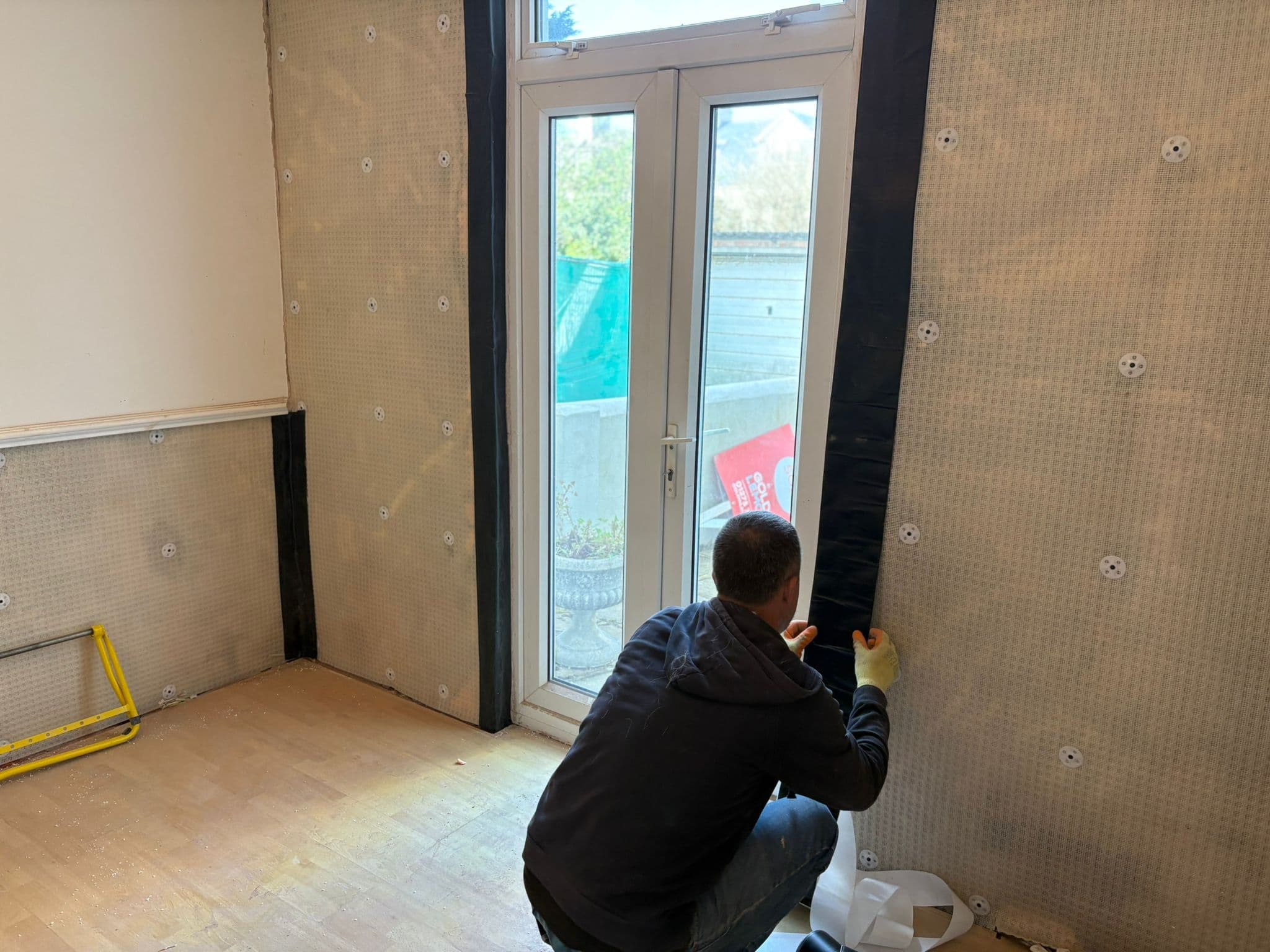
1. Fix it before you list. Right when the work is modest relative to your price, or when your likely buyers need mortgages — it removes the retention risk, widens your buyer pool and lets you market a dry house with paperwork. Bear in mind treated walls take months to dry fully (here is how long damp proofing takes), so the earlier before listing, the better.
2. Sell with a report and a quote on the table. Often the smartest move when time is short. You disclose honestly, present the independent survey and fixed quote, and either price accordingly or let the buyer choose between a small reduction and you completing the work before exchange. It keeps you in control of the number.
3. Sell as-is to a cash buyer or at auction. Sensible when the works are extensive, you cannot fund them, or speed matters more than the last few percent. Cash buyers bypass lender scrutiny entirely and auction buyers price renovation in — just go in with realistic expectations about the discount.
If work has been done: guarantees are worth real money
If the house has had damp proofing at any point, dig out the certificate — the TA6 requires a copy anyway, and an unexpired, written guarantee is one of the most reassuring documents you can put in front of a buyer and their lender. Most damp-proofing guarantees can be transferred to the new owner, though schemes vary (some transfer automatically, some need notification or a small fee), so check the terms on your certificate. Our own remedial work as a Biokil-approved contractor carries a 30-year written guarantee — precisely so that the next survey on the house has a documented answer waiting for it.
The seller's checklist
- Don't panic, and don't conceal. Answer what you are asked truthfully; keep your position honest and defensible.
- Get your own diagnosis before the buyer's surveyor guesses. An independent damp survey pre-listing puts you in control of the story.
- Fix the cheap causes now. Clear the gutters, lower the flower bed bridging the damp-proof course, sort the extractor fans — condensation and mould issues are often the cheapest to resolve and the ugliest in photos.
- Gather every document — guarantees, invoices, treatment reports, building control sign-offs.
- Meet a survey note with a fixed quote, not an argument.
A buyer asking for thousands off on the strength of a one-line damp note is negotiating, not quoting. Your best defence is a real diagnosis and a real number.
If you are selling — or a buyer's survey has just landed and you need a fast, honest answer — we survey homes across Brighton, Hove and Sussex from £95 plus VAT, credited against any works, and as a Biokil-approved contractor our remedial work carries a 30-year written guarantee. Call 01273 536 985 or get in touch and we will tell you what the damp actually is, what it genuinely costs to fix, and what we would do in your position.