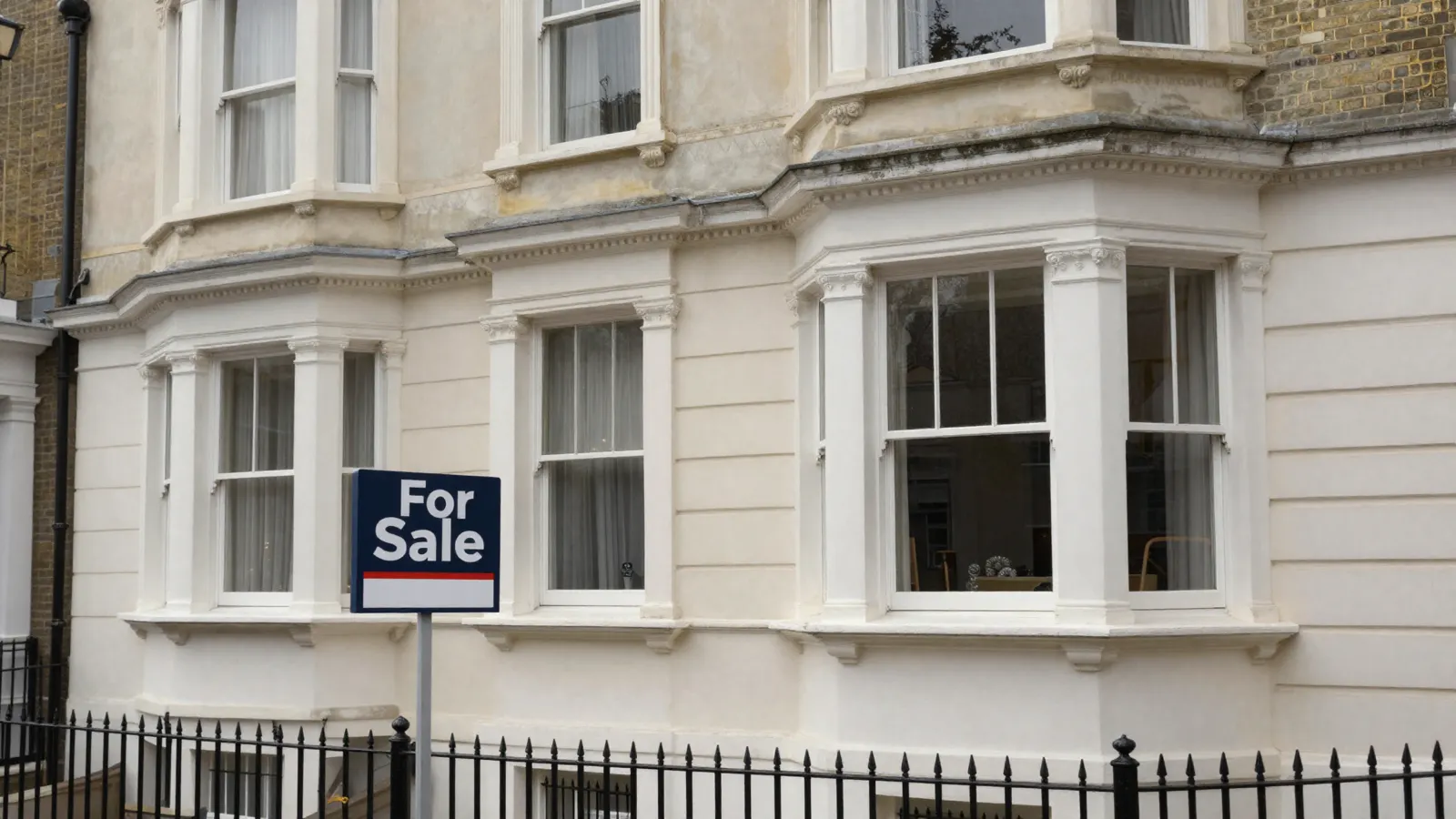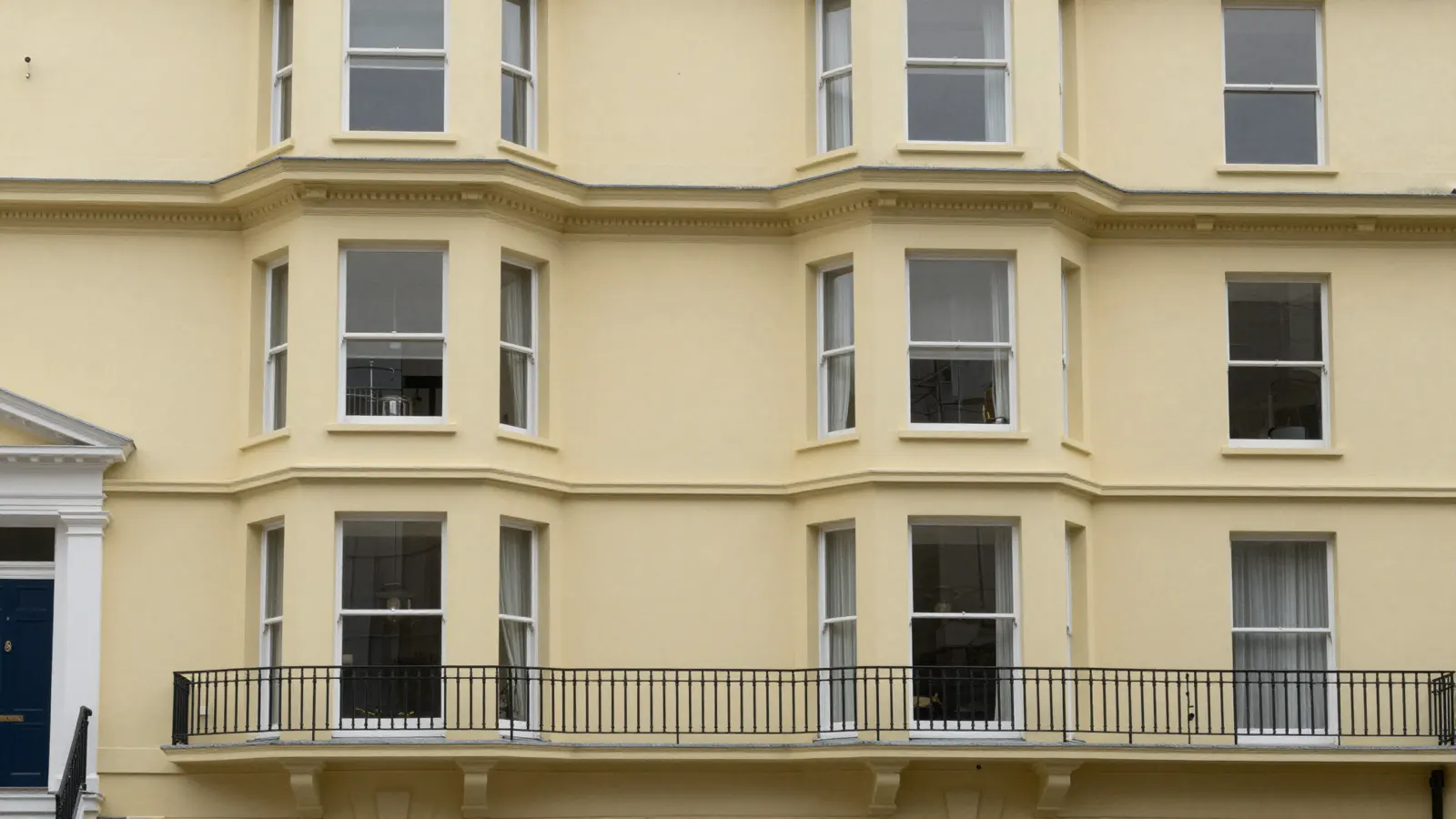
Brighton and Hove have one of the densest concentrations of listed and locally listed buildings on the south coast. Regency squares, Victorian terraces in the conservation areas of Kemptown, Montpelier and Clifton Hill, fishermen's cottages in the Old Town, and a remarkable stock of buildings constructed in flint and bungaroosh. These properties are beautiful, but they behave nothing like a modern cavity-wall house — and when damp appears, treating them the modern way usually makes things worse.
If you own a listed property in the city, the most important thing to understand is this: Brighton & Hove City Council's heritage team is explicit that conventional damp treatments are often the wrong intervention in historic buildings. Chemical damp-proof course injection, cementitious tanking, gypsum render and plastic membrane systems are all flagged as approaches that do not allow the building to breathe as it was originally designed. In flint and bungaroosh walls in particular, these systems are described as not always effective and, critically, as irreversible. For a listed building, irreversible is a serious word. It usually means you will need listed building consent, and the council is likely to refuse it.
Why Old Buildings Behave Differently
Modern houses are built to keep water out. A cavity, a damp-proof course, plastic membranes and impermeable finishes form a sealed envelope, and if water ever does get in, it is trapped. That is why a modern wall can be damaged by even a small ongoing leak.
Pre-1919 buildings are built on the opposite principle. They are designed to absorb moisture during wet weather and release it back out through breathable lime mortars, lime plasters, lime washes and soft permeable bricks. Moisture moves through the wall in both directions, and as long as that drying cycle is intact, the wall stays in equilibrium.
Damp problems in heritage buildings are almost always caused by something blocking the drying cycle — not by water rising up from the ground.
Common culprits include cement pointing that traps water inside the wall, gypsum plaster sitting against damp masonry, modern paint that will not let the wall exhale, raised external ground levels, or a chemical injection from a previous treatment that has displaced the moisture rather than removed it.
What Brighton & Hove City Council Actually Recommends
Brighton & Hove City Council's damp treatment guidance for listed and locally listed buildings comes down to four points:
- Listed building consent is required for damp treatment works, and the council can require removal of unauthorised work at the owner's expense.
- The cause of the damp must be identified and removed before any treatment is considered. A diagnosis-first approach is the only acceptable one.
- Chemical injection systems and standard tanking are discouraged, particularly in flint and bungaroosh walls, because they are ineffective, trap moisture, and are irreversible.
- Take advice from an independent qualified surveyor rather than a quotation from a damp proofing company that sells the very treatment it is recommending.
The Society for the Protection of Ancient Buildings publishes a homeowner guidance document called Fighting Damp that the council also points owners towards, and it is worth reading before you commission any work. You can find it via the SPAB.
What Usually Turns Out to Be the Problem
In four decades of surveying older properties across the city, the vast majority of cases initially diagnosed as rising damp turn out to be something else once you look properly.
Cement Pointing on a Lime Wall
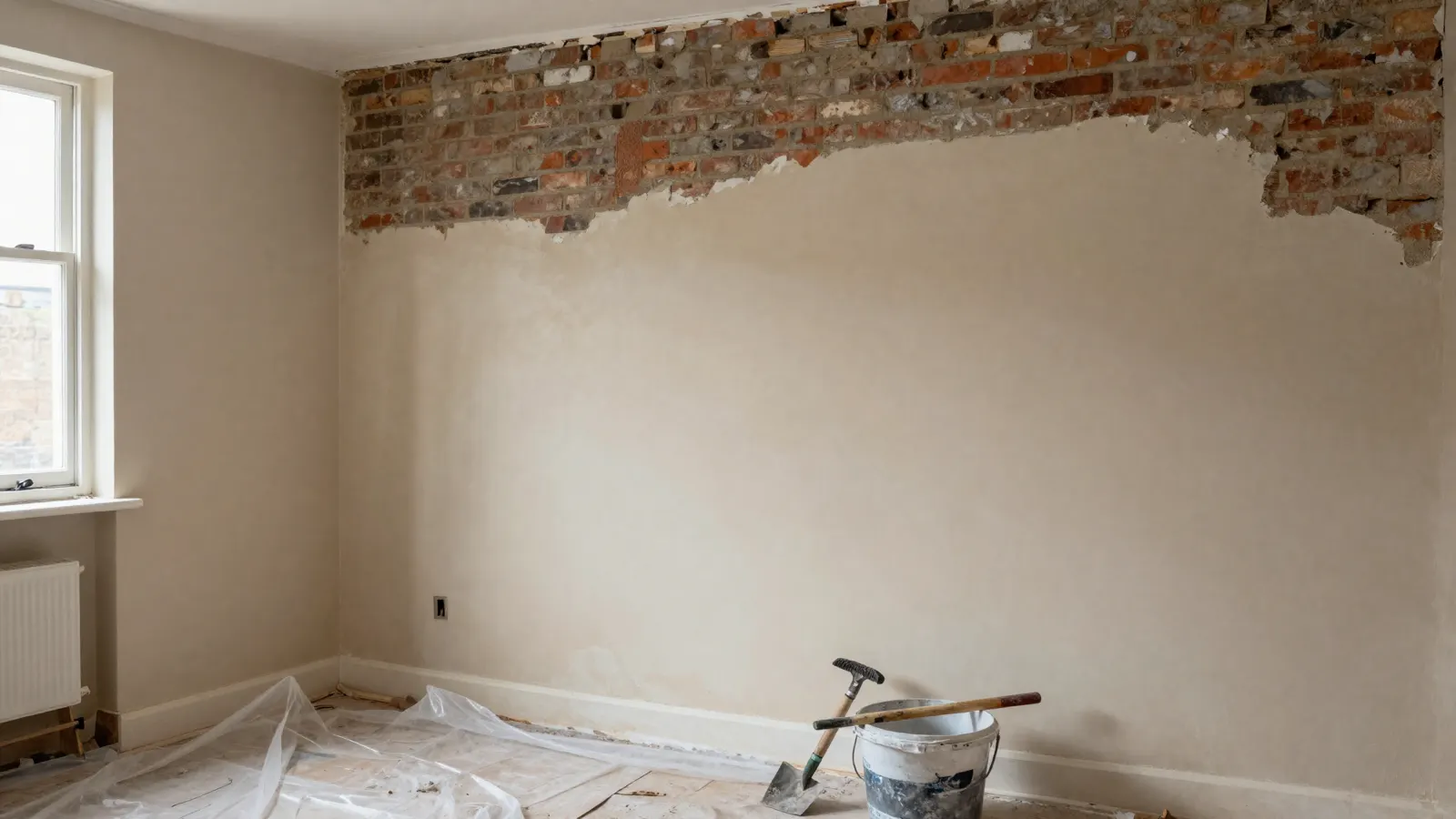
The most common culprit is cement pointing applied to a wall that was originally pointed in lime. Cement is harder and far less permeable than the bricks or flint around it, so when moisture inevitably gets into the wall, the only place it can leave is through the face of the brick. That accelerates erosion and forces moisture to find an alternative route, which is often inward.
Raised External Ground Levels
The next most common cause is raised external ground levels. Decades of new paving, asphalt or paths added against the building have bridged the original DPC line, or in older buildings have raised the ground above the level where the wall is designed to dry out.
Sealed-In Moisture, Penetrating Damp and Condensation
Beyond pointing and ground levels, we regularly find internal gypsum plaster and modern paints applied directly over damp masonry, sealing in moisture and producing a wet, blown plaster layer that looks identical to rising damp on a moisture meter. Failed or absent rainwater goods, leaking downpipes, cracked render at parapet level, and missing flashing are all forms of penetrating damp that present at the base of a wall and get misdiagnosed.
And condensation — by far the most common cause of damp in any Brighton property, listed or not — is especially prevalent in old buildings that have been retrofitted with double glazing but never had their ventilation upgraded.
A meter reading at the base of a wall does not tell you that you have rising damp. It tells you the wall is wet at the bottom. The job of a good surveyor is to work out why.
Breathable Repair: What the Building Was Designed For
When the cause is correctly identified and removed, the building usually does most of the recovery itself, and the appropriate repairs are straightforward in principle:
- Repointing should be carried out in lime mortar matched to the original in strength and texture — typically hot-mixed lime or natural hydraulic lime NHL 2 to 3.5 depending on exposure. Cement pointing should never be used on a pre-1919 wall.
- Internal replastering should be done in lime, ideally a haired lime base coat with a lime or clay finish, not gypsum, so the wall can continue to dry inwards.
- Decorative finishes should be breathable mineral paints such as limewash, silicate paints or clay paints, never modern vinyl or plastic emulsions.
- Raised external ground levels should be reduced, or a French drain installed, to give the base of the wall an evaporation zone.
- Ventilation needs to be restored across the whole building: sub-floor air bricks unblocked, chimney ventilation reinstated, unobtrusive trickle vents fitted, and in some cases a discreet positive input or heat-recovery ventilation system added.
- Rainwater goods, the roof, parapets and flashings all need to be sound, because most rising damp disappears when the building stops being hit by water at the top.
Where breathable rendering is needed at high level or across an elevation, the same principle applies: lime, not a blanket of cement.
A Word on Dry Lining
Dry lining is mentioned in the council's guidance as one option that can be acceptable in some circumstances, but only where it incorporates a continuous ventilation route so the masonry behind it can still dry. A dry lining stuck directly to a wet wall, with no air gap and no escape route for moisture, is no better than gypsum plaster and will fail in the same way.
What Needs Listed Building Consent — and What Doesn't
The question of what needs listed building consent and what does not is a frequent source of confusion.
Like-for-like repair using the original materials — such as repointing in lime to match, relaying a slipped slate, or repairing a sash window — generally does not need consent, although it is always worth a quick conversation with the council's heritage team before starting.
Anything that changes the character of the building, introduces new materials, or is irreversible almost certainly does need consent. That includes:
- Chemical damp-proof course injection
- Internal tanking systems
- Replastering in gypsum
- Replacing lime render with cement
- Installing membranes
If a damp proofing contractor offers you a quote that does not mention consent at all, that is a red flag. Unauthorised work to a listed building is a criminal offence under the Planning (Listed Buildings and Conservation Areas) Act 1990, and enforcement can require the work to be undone at the owner's expense.
Our Job Is Often to Talk You Out of Damp Proofing
We are a damp proofing company, but on listed buildings our job is often to talk owners out of damp proofing. Most calls we take about a Regency town house or a flint cottage end in a survey report that recommends lime repointing, ground level reduction, ventilation improvements, and patience, rather than an injected DPC. We will say so in writing.
If the building genuinely needs more intervention, we will tell you that too, and we will tell you what is reversible and what is not. As a Biokil-approved contractor, our work is backed by a 30-year guarantee. Our damp surveys for heritage properties start from £95 plus VAT, and the fee is credited against any remedial work we carry out. The report is written so it can be submitted to the council's heritage officer in support of a listed building consent application where one is needed.
Get a Second Opinion Before You Sign
If you own a period property anywhere in Brighton, Hove or the wider Sussex conservation areas — whether that is the Old Town, Kemptown, Brunswick, Montpelier, Clifton Hill, Round Hill, Hanover, Lewes High Street or Rottingdean village — and you have been quoted for chemical injection or internal tanking, please get a second opinion before you sign. There is almost always a less destructive answer that the building was designed for in the first place.
For more information on the council's position, the Brighton & Hove City Council heritage team's damp treatment guidance is published on the council's planning pages, and the SPAB publication Fighting Damp is the standard homeowner reference.
To arrange a heritage-appropriate damp survey — or simply to ask whether what you have really is rising damp before you commit to any rising damp treatment — contact us or call us on 01273 536 985. On a listed building, the right first step is always a proper diagnosis, not a treatment.