If you have noticed signs of damp in your property, a professional damp survey is the essential first step toward understanding the problem and finding the right solution. Many homeowners are unsure what to expect, so we have put together this guide to walk you through the entire process — from booking to receiving your report.
It Starts With a Visual Inspection
A damp survey typically begins with a thorough visual inspection of both the interior and exterior of your property. The surveyor is building a first impression of where moisture might be entering and what type of damp is likely to be present.
Inside and out, they will look for common indicators of moisture problems, including:
- Staining on walls and ceilings
- Peeling decorations and blown plaster
- Mould growth — a frequent sign of condensation and mould
- Damaged plaster
- Defects in the external fabric of the building, such as cracked render, missing pointing, or blocked gutters
This initial walk-round helps the surveyor form a picture of the problem before any equipment comes out of the bag.
Taking Moisture Readings
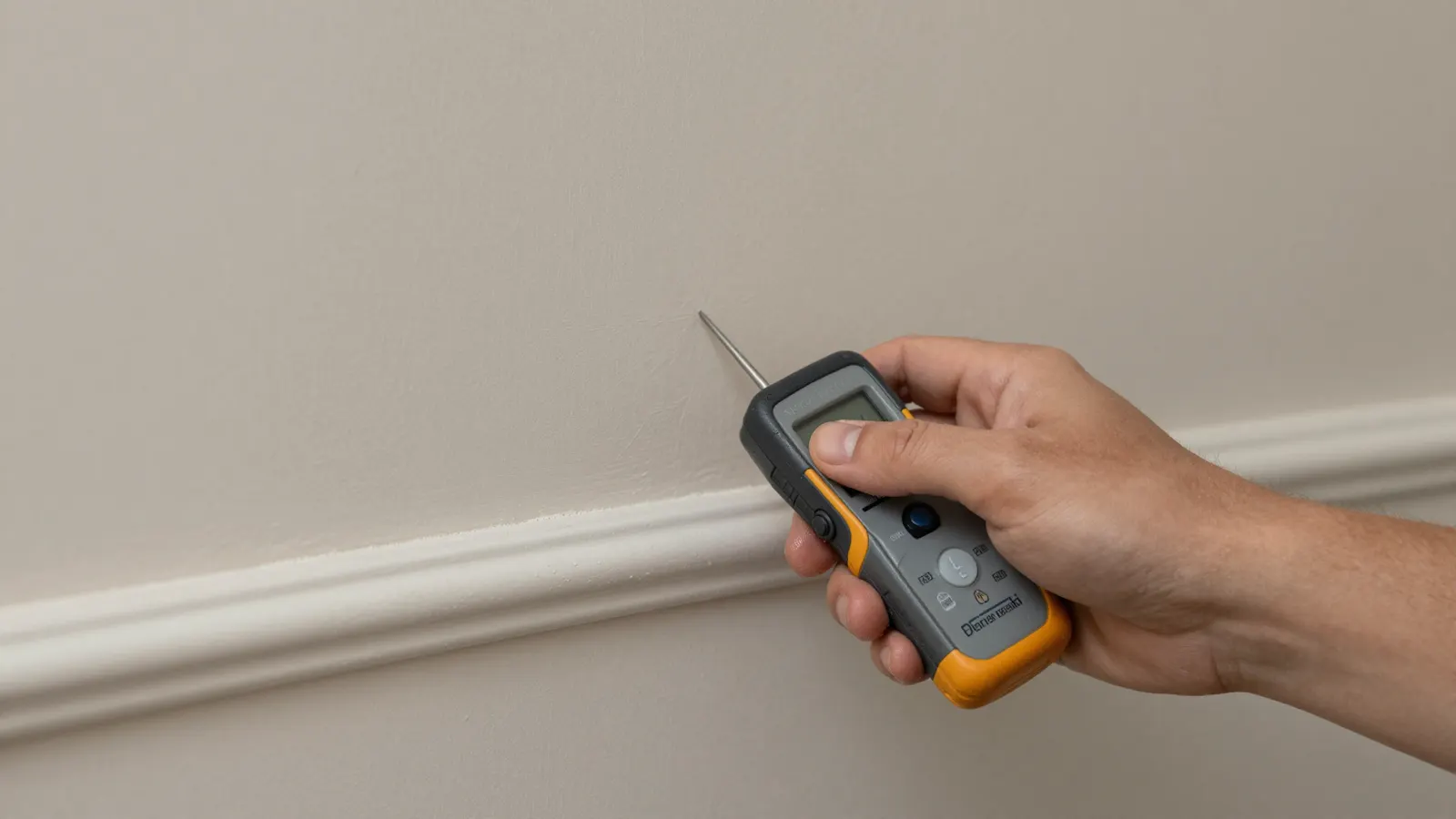
The surveyor will then use specialist equipment to take moisture readings from your walls and floors. A calibrated electrical moisture meter is the primary tool used, with readings taken at multiple heights and locations to build a moisture profile of the affected areas.
In some cases, the surveyor may also use a carbide meter. This involves taking a small sample of plaster or masonry and testing it in a sealed chamber to get a precise measurement of moisture content.
The carbide meter is considered the most accurate method for confirming rising damp.
That accuracy matters, because the right diagnosis dictates the right treatment — whether that turns out to be rising damp treatment, addressing penetrating damp, or something else entirely.
Specialist Diagnostic Tools for Complex Cases
For more complex cases, the surveyor may reach for additional diagnostic equipment:
- Thermal imaging camera — reveals hidden damp behind surfaces by detecting the temperature differences caused by moisture evaporation.
- Salt analysis tests — help distinguish between rising damp and other forms of moisture ingress, as rising damp typically carries hygroscopic salts up from the ground.
- Borescope cameras — used to inspect cavity walls or areas that are not easily accessible.
These tools turn invisible problems into measurable evidence, which is what separates a genuine diagnosis from guesswork. The same evidence often informs whether any affected timber treatment is needed.
What Your Report Will Contain
Once the inspection is complete, you will receive a detailed written report. This document outlines the type and extent of damp found in your property, the likely cause, and the recommended remedial works.
A good report should include:
- Annotated photographs of the affected areas
- Moisture readings mapped to specific locations
- A clear explanation of the proposed treatment method
- A quotation for the recommended work, so you can make an informed decision
The report is the deliverable that lets you act with confidence rather than guesswork — and it is just as valuable when buying a property, as we cover in Why You Need a Damp Survey Before Buying a House.
How to Spot an Honest Survey
It is worth noting that a reputable damp proofing company will charge a fair fee for the survey — this reflects the specialist knowledge and equipment involved.
A genuine professional will give you time to consider the report and will be happy to answer any follow-up questions.
Be cautious of any company that pressures you into signing up for work on the spot. At Brighton Damp Proofers, as a Biokil-approved contractor, our surveys start from £95 plus VAT, and the fee is often credited against the cost of any remedial works — so you are not paying twice. We pride ourselves on providing honest, transparent advice regardless of whether you choose to instruct us for the remedial work, all backed by our 30-year guarantee. If you are weighing up the numbers, our guide to How Much Does Damp Proofing Cost in Brighton & Sussex? explains what to expect.
Book Your Damp Survey
If you have spotted damp and want a clear, evidence-based answer, contact us today. Call Brighton Damp Proofers on 01273 536 985 to book your survey and take the first proper step toward a dry, healthy home.