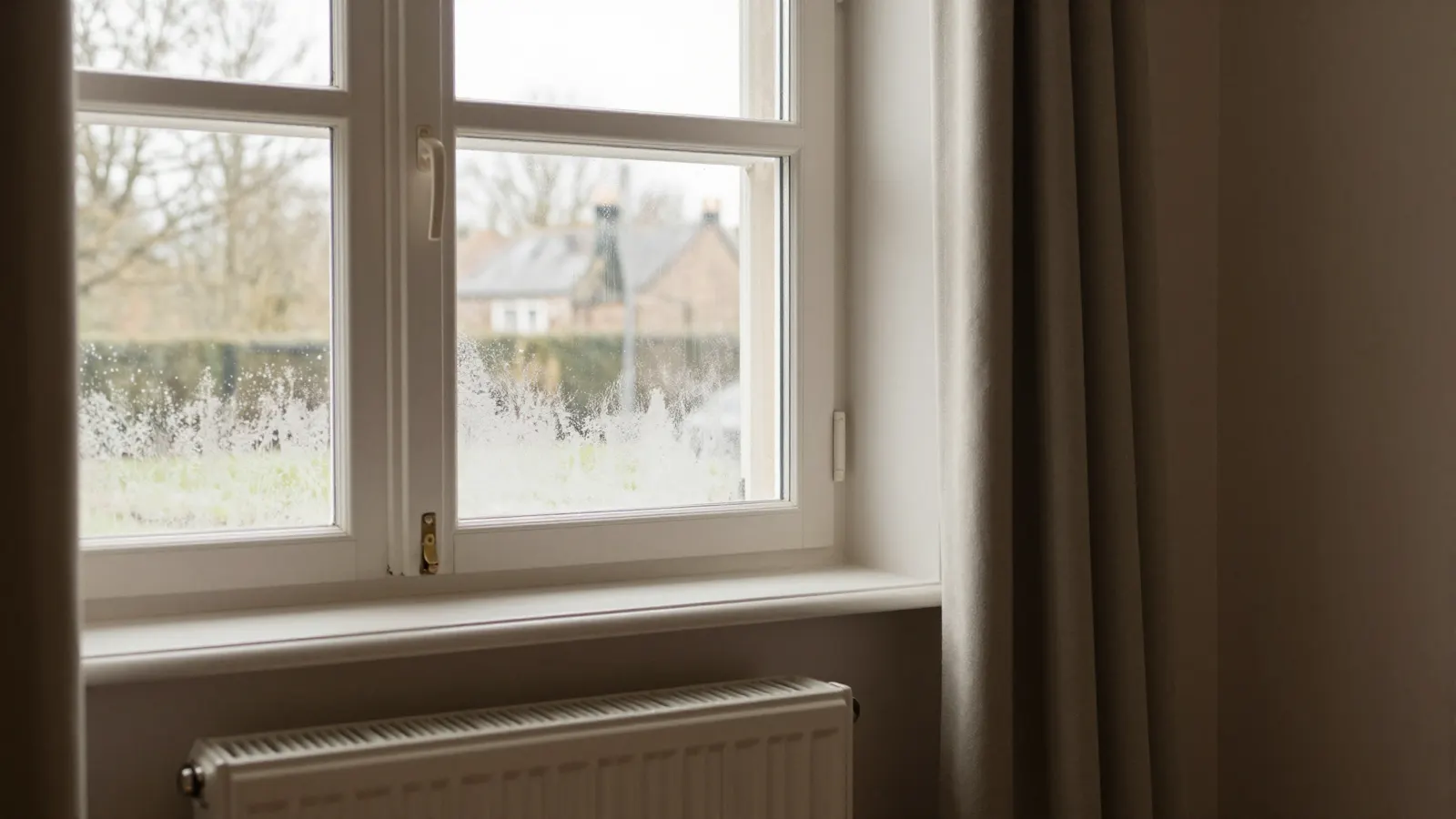
As temperatures drop across Sussex during the winter months, condensation becomes the most common damp-related complaint we hear from homeowners. That familiar pattern of water droplets on windows, damp patches in corners, and the unmistakable musty smell of mould are all signs that your home has a condensation problem. The good news is that condensation is largely preventable with the right approach.
What Causes Condensation in Winter
Condensation occurs when warm, moist air meets a cold surface. The air cannot hold as much moisture at lower temperatures, so water droplets form on windows, walls, and other cold surfaces. In winter, the temperature difference between heated indoor air and cold external walls is at its greatest, which is why condensation is so much worse during the colder months.
The moisture itself comes from everyday activities:
- Cooking
- Bathing and showering
- Drying clothes indoors
- Even breathing
Condensation is not a fault in your home — it is moisture from everyday living meeting cold surfaces. Manage the moisture and the temperature, and you manage the problem.
If you are unsure whether what you are seeing is condensation or something more serious, our guide on Condensation vs Damp explains how to tell the difference.
Improve Ventilation First
The most effective way to combat condensation is to improve ventilation. This means allowing moist air to escape and fresh, drier air to enter. Start with the basics:
- Use extractor fans in the kitchen and bathroom whenever you cook, shower, or bathe, and keep them running for at least 15 minutes afterwards.
- Open your trickle vents. If your property has trickle vents in the windows, make sure they are open. Many homeowners close them in winter to keep out the cold, but this traps moisture inside and makes condensation worse.
Stop Drying Clothes Indoors
Drying clothes indoors is one of the biggest contributors to excess moisture in the home. A single load of wet washing releases several litres of water into the air as it dries.
- If you must dry clothes indoors, do so in a well-ventilated room with the window slightly open or an extractor fan running.
- Better still, use a tumble dryer that vents to the outside.
- Avoid draping clothes on radiators, as this puts moisture directly into the warmest air in the room, which then condenses on the coldest surfaces.
Heat Your Home Consistently
Heating your home consistently makes a significant difference. Cold walls attract condensation, so maintaining a low background temperature throughout the day is more effective than heating rooms intensely for short periods. This keeps wall surfaces above the dew point temperature, reducing the likelihood of condensation forming.
Don't Forget the Bedrooms
It is particularly important to heat bedrooms, which are often the worst-affected rooms because we produce moisture while sleeping and many people keep bedroom windows closed overnight. Where cold external walls are the issue, improved wall insulation can help keep surfaces warmer and far less prone to condensation.
When to Consider a PIV Unit
For persistent condensation problems, a positive input ventilation (PIV) unit can be transformative. These units are installed in the loft space and gently introduce filtered, dry air into the property, creating a slight positive pressure that pushes moist, stale air out through natural leakage points.
PIV systems are quiet, energy-efficient, and highly effective at eliminating condensation throughout the entire home. We install PIV units across Brighton and Sussex and they consistently deliver excellent results.
Treating Mould the Right Way
If condensation has already led to mould growth, it is important to treat it properly. Mould spores can cause respiratory problems, particularly in children, the elderly, and anyone with asthma or allergies.
Clean mould with a specialist mould treatment product rather than bleach, which only removes the surface colour without killing the spores.
Once the mould is treated, address the underlying ventilation issue to prevent it from returning. If mould is widespread or recurrent, a professional survey can identify the root cause and recommend a lasting solution. You can read more in our guide to Black Mould on Walls, or learn about our condensation and mould treatment service.
Get a Lasting Solution
If condensation and mould keep coming back no matter what you try, it is worth getting a professional opinion. Our damp survey service pinpoints the root cause, and surveys start from £95 plus VAT, credited against any works you go ahead with. As a Biokil-approved contractor, our work is backed by a 30-year guarantee.
To book your survey or talk through a winter condensation problem, contact us today or call 01273 536 985 — we will help you keep your home dry, warm and healthy through the colder months.