Timber decay is a serious concern for property owners across Sussex, particularly in older buildings where timbers may have been exposed to moisture over many years. The two main types of fungal timber decay are dry rot and wet rot, and understanding the difference between them is important because they behave differently, have different implications for your property, and require different treatment approaches.
Dry Rot: The More Serious of the Two
Dry rot, caused by the fungus Serpula lacrymans, is the more serious of the two. Despite its name, dry rot requires moisture to establish itself, but once it takes hold, it can spread extensively through a building. The fungus produces long, root-like strands called mycelium that can travel through masonry, behind plaster, and along surfaces to reach new timber. This ability to spread beyond the original moisture source is what makes dry rot so destructive and so important to treat promptly.
Dry rot's ability to spread beyond the original moisture source is what makes it so destructive — and so important to treat promptly.
How to Identify Dry Rot
You can identify dry rot by its characteristic signs:
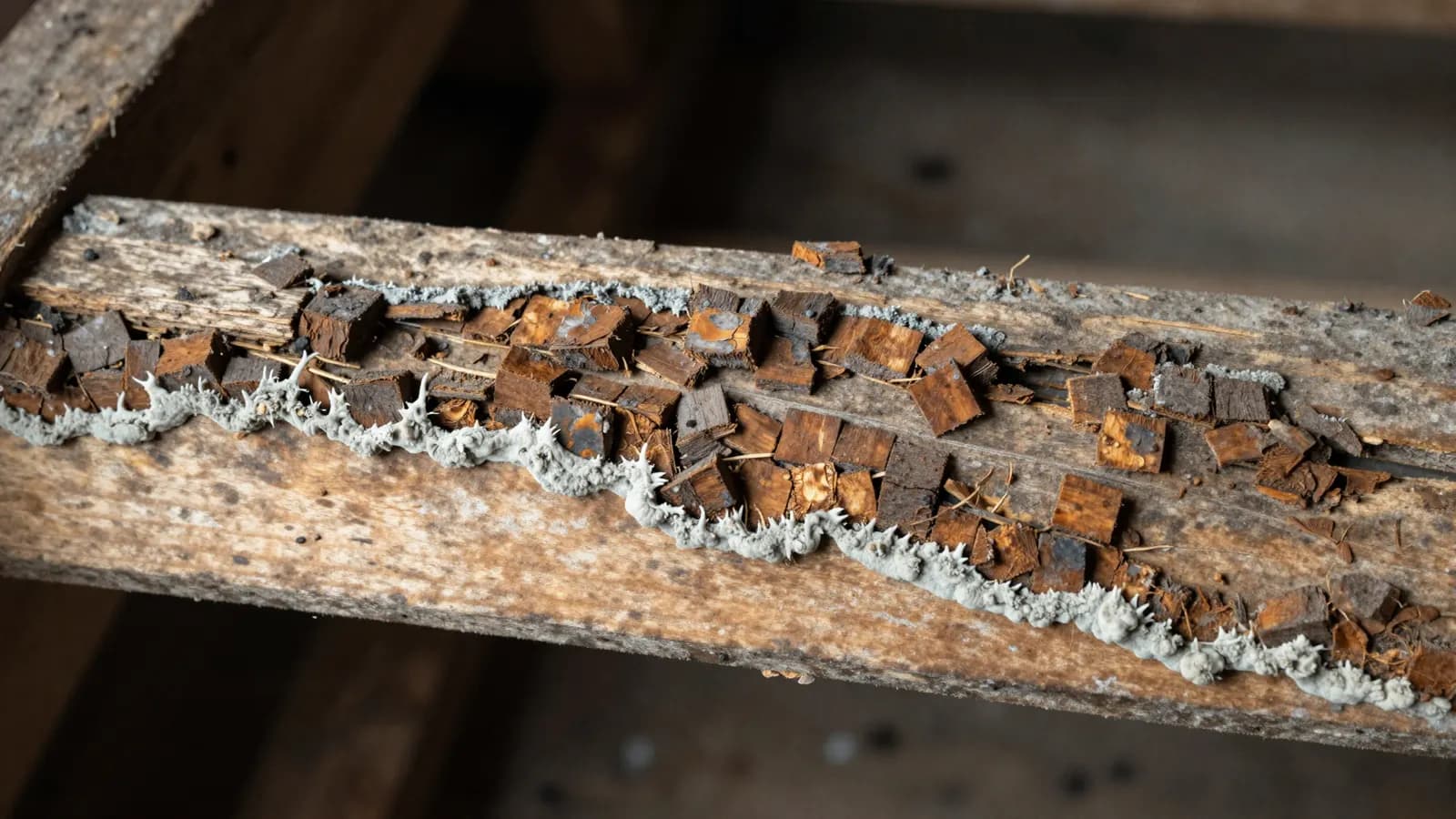
- Affected timber becomes dry, brittle and crumbly, breaking into cube-shaped pieces along the grain
- A cotton wool-like white mycelium growth may appear on the surface of the timber
- In advanced cases, the distinctive fruiting body of the fungus — a large, flat, pancake-shaped growth that is rusty red in colour with a white border
- A distinctive musty, mushroom-like smell that many people find unmistakable once they have encountered it
Wet Rot: Localised but Still Damaging
Wet rot, by contrast, is caused by several different fungi, the most common being Coniophora puteana (cellar fungus). Wet rot requires a higher moisture content than dry rot and does not spread beyond the area of dampness. Where dry rot can travel through masonry to find new timber, wet rot stays localised to the timber that is actually wet. This makes wet rot less destructive overall, but it can still cause significant structural damage if the affected timber is load-bearing.
How to Identify Wet Rot
Wet rot is identified by different signs:
- Affected timber becomes soft and spongy — you can often push a screwdriver or knife blade into it easily
- The timber may appear darker than surrounding unaffected wood
- The surface may be cracked along the grain
- Paint or varnish over wet rot timber often cracks and flakes
- Unlike dry rot, you are unlikely to see extensive fungal growth on the surface, although thin, dark strands may be visible in some cases
Dry Rot vs Wet Rot at a Glance
| Feature | Dry Rot | Wet Rot |
|---|---|---|
| Fungus | Serpula lacrymans | Several fungi, most commonly Coniophora puteana (cellar fungus) |
| Moisture needed | Lower; needs moisture to establish | Higher moisture content required |
| Spread | Travels through masonry, plaster and surfaces to reach new timber | Stays localised to the wet timber |
| Smell | Distinctive musty, mushroom-like smell | No distinctive smell noted |
| Timber appearance | Dry, brittle, crumbly; cube-shaped cracking; white mycelium; rusty-red fruiting body | Soft, spongy, darker; cracked along the grain |
Treating Dry Rot
The treatment approach differs significantly between the two types. Dry rot treatment is more involved because the fungus can spread through masonry. Treatment typically involves:
- Removing all affected timber plus a safety margin of apparently sound timber
- Treating surrounding masonry with a fungicide
- Replacing the removed timber with pre-treated wood
- Identifying and eliminating the source of moisture
Because of its ability to spread, dry rot treatment should always be carried out by an experienced specialist as part of a thorough timber treatment programme.
Treating Wet Rot
Wet rot treatment is generally more straightforward because the decay is localised to the wet timber. The primary step is to identify and eliminate the source of moisture that is keeping the timber wet. This might be a plumbing leak, rainwater penetrating damp, or condensation.
Once the moisture source is removed and the timber dries out, the wet rot fungus can no longer survive.
Damaged timber is then replaced or repaired as necessary, and any remaining sound timber may be treated with a preservative as a precaution.
Why Professional Diagnosis Matters
In both cases, early detection and professional diagnosis are essential. If you suspect timber decay in your property, a specialist damp survey will confirm the type of rot present, assess the extent of the damage, and recommend the appropriate treatment. (For a sense of what that involves, see our guide on What Does a Damp Survey Involve?) Surveys start from £95 plus VAT, and the fee is credited against any works we carry out.
At Brighton Damp Proofers, our experienced surveyors have extensive experience with both dry rot and wet rot across all types of Sussex properties, from Victorian terraces to modern builds. As a Biokil-approved contractor, our remedial work is backed by a 30-year guarantee.
If you are worried about timber decay in your home, contact us or call 01273 536 985 to arrange a survey and get a clear diagnosis before any treatment begins.