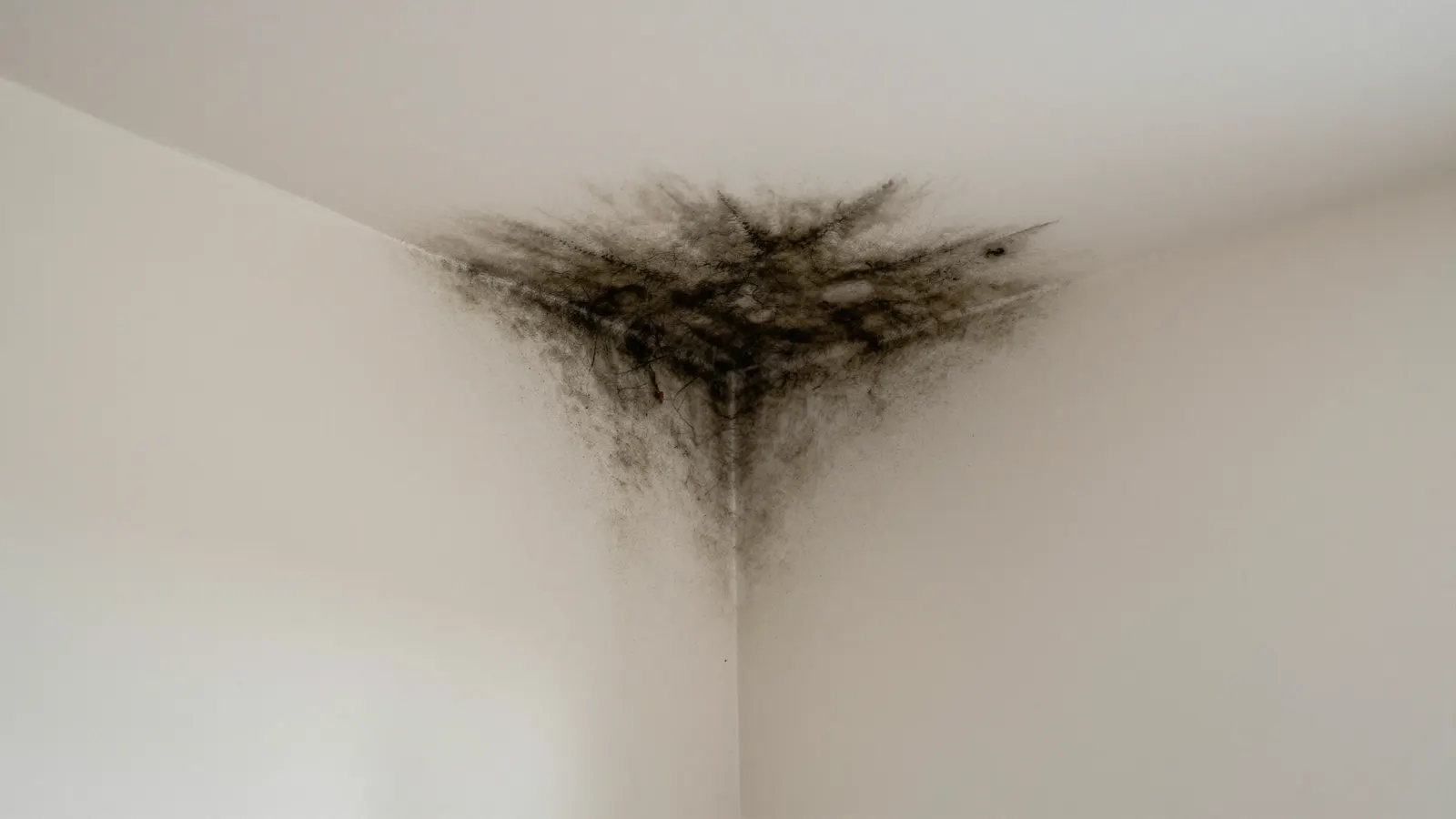
Black mould appearing on walls, ceilings and around windows is one of the most common problems we are called out to across Brighton and Sussex, and one of the most misunderstood. People reach for the bleach and treat it as a cleaning job, only to watch it return in the same spot a few weeks later. The reason is simple: black mould is not the problem itself, it is a visible symptom of too much moisture and too little ventilation. Until you fix the underlying cause, no amount of scrubbing will keep it away for good.
Black mould is not a cleaning problem. It is a moisture problem wearing a cleaning problem's clothes — and that is why the bleach never wins.
Are the Health Risks Real?
It is reasonable to be concerned about the health side, and worth being clear-headed rather than alarmed. The NHS and UK government guidance are consistent: damp and mouldy environments can cause or worsen respiratory problems, trigger asthma attacks, and provoke allergic reactions such as a runny nose, sneezing, red eyes and skin rashes.
The people most at risk are:
- Babies and children
- Older adults
- Anyone with existing breathing conditions such as asthma or COPD
- Those with weakened immune systems
For most healthy adults a small amount of mould is unlikely to cause serious harm, but it should never simply be ignored, and persistent mould in a bedroom or a child's room is a clear signal to act.
What Actually Causes Black Mould?
In the great majority of cases, black mould on walls is caused by condensation rather than rising or penetrating damp. Condensation forms when warm, moisture-laden indoor air meets a cold surface — typically an external wall, a window reveal, the corner of a room, or behind furniture pushed against an outside wall — and the moisture in the air turns to water on that cold surface.
Everyday life adds a surprising amount of moisture to the air: cooking, showering, drying laundry indoors, even breathing. In a poorly ventilated home that moisture has nowhere to escape, so it settles on the coldest surfaces and feeds mould growth.
When It Is Not Condensation
Less often, recurring mould signals genuine damp — a penetrating leak from a failed gutter or cracked render, or rising damp at the base of a wall. Telling these apart is exactly what a damp survey is for. If you are unsure which you are dealing with, our guide to Condensation vs Damp explains the tell-tale differences.
How to Remove It Safely
If the affected patch is small — government guidance suggests under about one square metre — you can usually deal with it yourself safely. Follow these steps:
- Open the windows but close the internal doors so you are not spreading spores through the rest of the house.
- Wear protection — a mask, gloves and eye protection.
- Use a proper mould remover or a fungicidal wash and wipe the area gently with a damp cloth.
- Throw the cloth away afterwards rather than rinsing and reusing it.
The one thing you must not do is dry-brush, scrape or vacuum dry mould, because that flings spores into the air where they are far easier to breathe in. And avoid simply painting over it — ordinary paint traps the mould underneath and it grows straight back through.
Why It Keeps Coming Back
Here is the part that catches people out: if the mould keeps returning after you clean it, that is not a sign you cleaned it badly — it is proof that the underlying moisture problem is still there.
The warning signs that the root cause needs addressing, not just the surface, are:
- Mould returning in the same place every winter
- Mould spreading across a large area
- Mould accompanied by a persistent musty smell
If it keeps coming back, the wall is telling you something the bleach cannot. Cleaning is a holding measure at best.
At that point the money is far better spent fixing the reason the wall is wet or cold in the first place.
The Lasting Fix: Moisture and Ventilation
The lasting fix is almost always about moisture and ventilation. Improving airflow is the single most effective step:
- Extractor fans that actually vent outside in kitchens and bathrooms
- Trickle vents in windows
- For whole-house problems, a positive input ventilation unit that gently replaces stale humid air with drier filtered air for only a few pounds a year to run
Keeping the home reasonably and evenly heated raises surface temperatures so condensation is less likely to form, and improving insulation removes the cold spots and cold bridges where mould takes hold. Our practical tips on how to prevent condensation in winter cover the day-to-day habits that make a real difference.
And where the cause turns out to be genuine penetrating or rising damp rather than condensation, that defect has to be repaired directly before any ventilation work will hold. This is where professional condensation and mould treatment earns its keep.
Why Brighton and Sussex Homes Are So Prone to It
Brighton and Sussex homes are particularly prone to this. The city is full of solid-wall Victorian and Edwardian terraces with cold external walls and no cavity to insulate, many of them retrofitted with double glazing that sealed the building up tight without ever upgrading the ventilation that the original draughty windows used to provide.
Add a high proportion of flats, conversions and rented HMOs, plus a damp maritime climate, and you have close to ideal conditions for condensation mould. It is a very solvable problem, but the solution is ventilation and warmth, not a stronger bottle of bleach.
Get the Cause Diagnosed Before You Spend
If you have black mould that keeps coming back, or you are not sure whether you are dealing with condensation or something more serious, the sensible next step is a survey to identify the real cause before you spend money on the wrong fix. We cover Brighton, Hove and the wider Sussex area, our surveys start from £95 plus VAT and are credited against any work, and as a Biokil-approved contractor our remedial work carries a 30-year guarantee. Call us on 01273 536 985 or get in touch through our contact page.