Few discoveries unsettle a homeowner like a scatter of small round holes in a floorboard, a beam or an old piece of furniture. The word "woodworm" sounds alarming, but the reality is more nuanced: many of the holes people find are evidence of an infestation that died out decades ago and needs no treatment at all. The skill — and the thing that saves you money — is telling a live, active infestation from an old, dormant one. This guide walks through the signs, the test that settles it, and what professional timber treatment actually costs.
What woodworm actually is
"Woodworm" is not a worm at all. It is the larval stage of several species of wood-boring beetle. An adult beetle lays its eggs in the surface of timber; the larvae hatch and tunnel through the wood, eating it from the inside for anywhere from two to five years; then they pupate and chew their way out as adult beetles, leaving the tell-tale exit hole behind. By the time you see holes, the damage inside has already been done — and the beetle that made them has flown.
The signs of woodworm to look for
Run through this checklist on floorboards, joists, roof timbers, staircases, skirtings and old furniture:
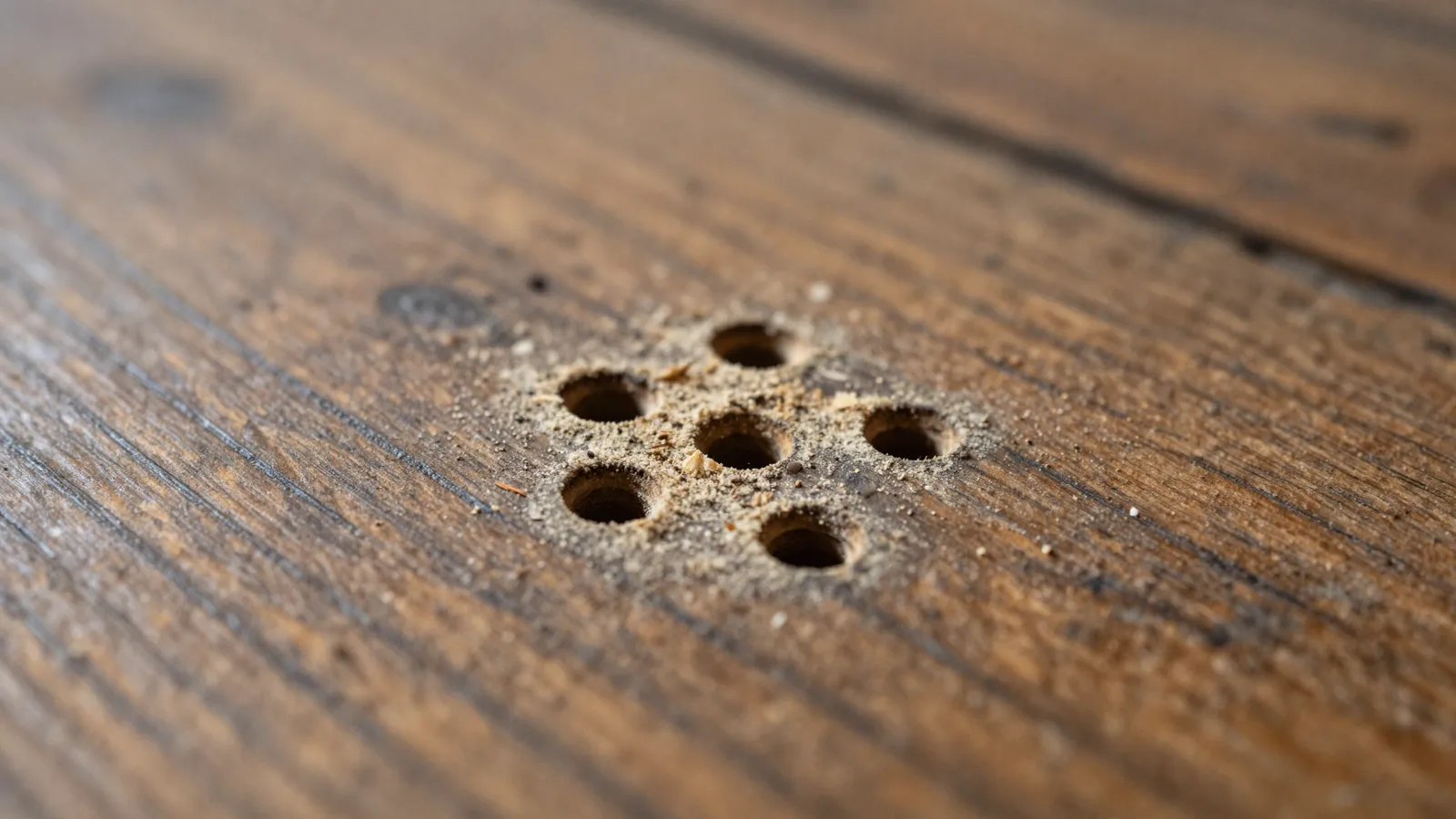
- Exit holes — small, round, sharp-edged holes typically 1–2 mm across, the classic signature of the common furniture beetle.
- Frass — a fine, gritty, sawdust-like powder (the larvae's bore dust) around or below the holes. Fresh frass is one of the clearest signs of life.
- Tunnels — visible bore channels just under the surface where timber has split or worn away.
- Crumbling and weakened wood — especially at the corners and edges of joists and floorboards.
- Dead beetles — adult beetles on windowsills or floors near affected timber, usually in late spring and summer.
- Soft, springy floorboards — a sign that structural timber has been hollowed out and needs assessment.
The crucial question: is it active or old?
This is the part that matters. Old exit holes look identical to new ones, so the holes alone tell you almost nothing. Look instead for signs of recent activity:
- Fresh frass. Clean, pale, gritty powder that reappears after you have wiped a surface down is the strongest indicator of a live infestation. Old frass is greyer, clumped with dust, and does not return.
- Clean, pale holes. Active exit holes show light-coloured, sharp-edged wood inside. Old holes are darkened and grimed over.
- The flight season. Adult furniture beetles emerge roughly May to October. Seeing live or freshly dead beetles in those months points to an active problem.
If you are still unsure, there is a simple DIY test: lightly cover a patch of holes with masking tape, or mark them with a pen, and check after the next spring–summer flight season. New holes breaking through, or fresh frass, mean the infestation is still active. No change usually means it is long dead.
Holes do not mean you need treatment. Fresh frass, pale clean holes and beetles in flight season mean you do. Telling the two apart is exactly what a survey is for.
Which beetle are you dealing with?
The species matters because it changes both the risk and the treatment.
| Beetle | Exit hole | Notes |
|---|---|---|
| Common furniture beetle | 1–2 mm, round | By far the most common; the typical "woodworm" |
| Death watch beetle | 3 mm, round | Attacks damp hardwood (oak); common in old and listed buildings |
| House longhorn beetle | 6–10 mm, oval | Rare but serious; targets softwood roof timbers |
| Wood-boring weevil | 1 mm, ragged | Only attacks timber already softened by damp and decay |
The damp connection you should not ignore
Here is the link most homeowners miss: woodworm thrives in damp timber. Larvae need a certain moisture content to survive, which is why infestations cluster in poorly ventilated sub-floor voids, damp cellars and roof spaces. The wood-boring weevil and death watch beetle in particular only take hold where timber is already wet from another problem.
That means woodworm is very often a symptom of an underlying damp issue — a leak, blocked sub-floor air bricks, or condensation. Treat the beetles but leave the damp, and you are inviting them straight back, often alongside wet rot or dry rot in the same timbers. A good survey looks for the moisture source, not just the holes.
How woodworm is treated
For an active common-furniture-beetle infestation, treatment is usually a permethrin- or boron-based insecticide applied by brush or spray to all affected and at-risk timber, which kills emerging adults and larvae near the surface. Deeper infestations — and death watch beetle in thick structural oak — also need the timber injecting through the exit holes. Crucially, severely weakened structural timber may need cutting out and replacing, and the underlying damp must be fixed for any treatment to last.
What woodworm treatment costs in 2026
| Item | Typical cost |
|---|---|
| Woodworm survey | £80 – £250 |
| Localised spray treatment | £150 – £350 |
| Loft / roof timbers (3-bed house) | £400 – £900 |
| Whole-property treatment | £500 – £1,000+ |
Costs rise with the extent of the infestation, the species, access, and any timber replacement or damp remediation required.
DIY or a professional survey?
A small, clearly active infestation in an accessible piece of furniture can be treated with a shop-bought permethrin product. But structural timbers, roof spaces and anything involving suspected death watch or house longhorn beetle — or any sign that damp is feeding the problem — warrant a professional timber survey. Treating the wrong thing, or treating beetles while ignoring the damp that drew them, is the most common way money gets wasted here.
We survey and treat woodworm and timber decay across Brighton, Hove and Sussex. Our surveys start from £95 plus VAT and are credited against any works, and as a Biokil-approved contractor our treatments carry a 30-year guarantee. Call 01273 536 985 or get in touch to book a timber survey.